Mobile RV Roof Decking and Subfascia Repair Across Florida
Soft decking underneath a rubber membrane is the point where cosmetic water damage becomes structural. Florida rain intensity makes this one of the most common serious repairs on coaches that have run with a failed seal for more than one season.
Moisture does not travel vertically through an RV roof - it migrates horizontally. When water breaches the membrane at a seam or penetration, it moves along the upper face of the decking under capillary action, spreading outward before gravity ever pulls it downward through the rafter bays. A pinless moisture meter placed at the visible soft patch is rarely at the wettest point on the roof. The wettest point is typically six to eighteen inches away, sitting underneath a section of membrane that still looks and feels intact. That migration pattern is why the repair scope always has to be established by measurement before any membrane or decking is cut.
How does water get under the membrane and into the decking?
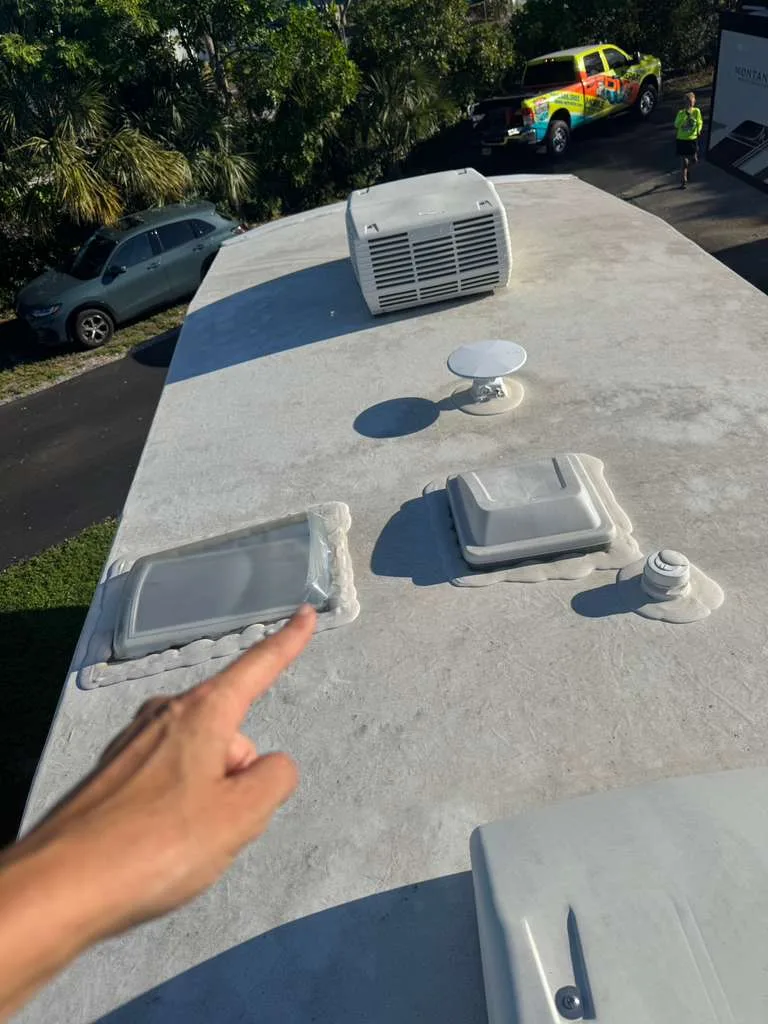
At a seam or penetration first, then by lateral migration across the decking surface rather than through it. Most RV owners picture water falling straight down through a hole in the membrane and soaking the wood directly below. The physics are almost the opposite. Membrane failures - a lifted seam, a cracked vent collar, a fastener whose backing plate has corroded - create an opening that admits water under pressure during rain. That water lands on the top face of the decking, which in most coaches built over the last twenty years is a luan composite panel or a lightweight plywood sheet. Both materials are porous across the grain, and water moves through the grain laterally far more easily than it drips downward through the rafter spacing.
The result is a wet zone that can be four times the area of the membrane opening that caused it. An air conditioner curb seal that has separated by an eighth of an inch can saturate two square feet of decking per heavy rain event, and Florida's afternoon storms deliver rain in volume rather than drizzle. After a summer of that pattern, the wet zone from one failing seal is often the size of a bath mat, and the membrane directly above it may read perfectly sound on visual inspection.
Subfascia members - the horizontal framing at the perimeter of the roof that the decking rests on - are the other failure mode. Water that reaches the edges wicks into the subfascia end grain and begins deteriorating the structural framing that the sidewall tops attach to. That is a different category of problem from soft decking: it affects the geometry of the coach rather than just the roof surface, and it is why we always check subfascia readings during any moisture survey rather than stopping at the flat roof area.
What does soft decking feel like when walked on?
The first sign is a very slight sponge underfoot - a fraction of an inch of give that would be easy to attribute to insulation below the decking rather than wet wood. Most owners who later describe it say it felt like walking on a firm foam pad. That stage is the cheapest point to address the problem, because the decking has absorbed water but has not yet delaminated, and the wet zone is still relatively contained.
As saturation increases over subsequent rain events, the give becomes pronounced - an inch or more of flex as the saturated fiber compresses and the glue lines between laminations fail. At this stage the membrane dimples visibly when weight is applied, which is a signal that the decking below has lost structural integrity across a significant area. A technician standing on this roof is at risk of punching through the membrane, which converts a decking problem into a membrane replacement as well.
Advanced cases show visible deformation even without standing on the roof: a slight wave or dish in what should be a flat surface, visible from ground level when the light is low and raking across the top of the coach. This is the decking having compressed enough to change the plane of the roof. At that point the repair scope includes subfascia inspection as a near-certainty rather than a precaution.
Can soft decking be repaired without replacing the roof membrane?
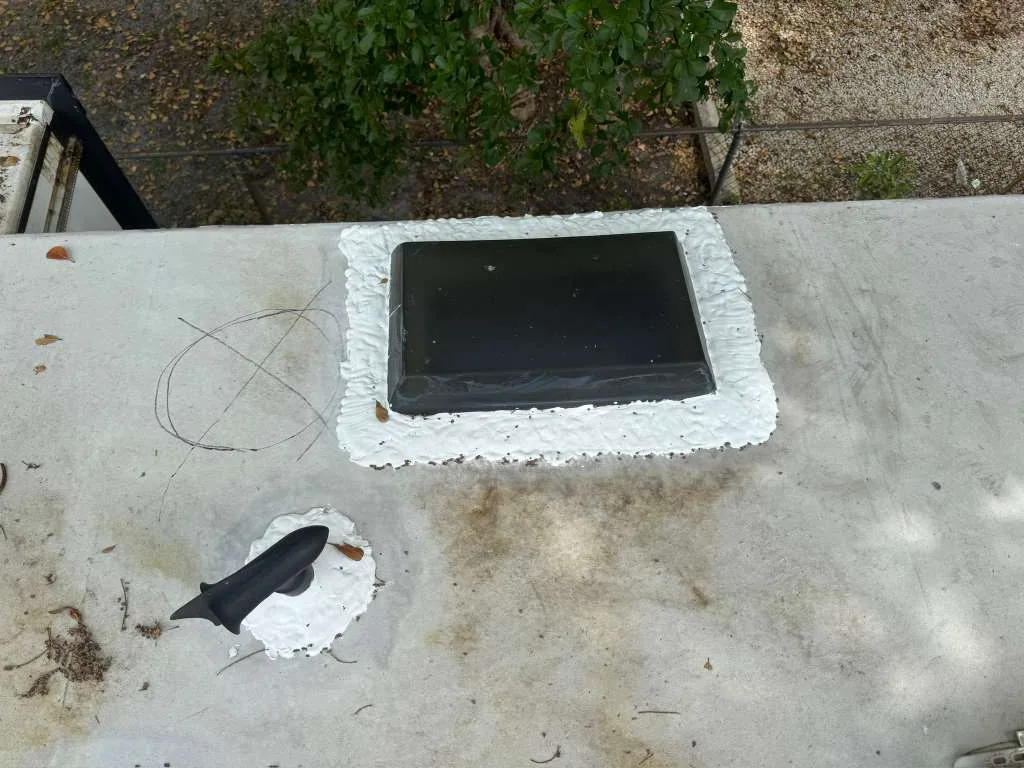
Sometimes, and the answer depends on how the membrane has aged alongside the decking, not just on the size of the wet area. A rubber EPDM membrane that has been on a coach for less than ten years and has not been walked on repeatedly at the soft section can often be peeled back cleanly, folded to the side, and re-adhered after the decking below is replaced. The adhesive bond between EPDM and the substrate weakens over a wet decking area anyway, which actually makes the membrane easier to lift there.
TPO membranes are thermally welded at seams and are less forgiving of being lifted and re-laid without heat equipment. Fiberglass roof skins are bonded directly and generally cannot be lifted at all without destroying them. For those coaches, any decking access requires working through the interior ceiling or accepting that the membrane section above will need replacement. That cost calculation almost always favors a full decking and membrane replacement over trying to preserve a membrane that has been sitting over wet wood for more than one season.
The honest assessment is that in Florida, where the rain volume is high and coaches often go through a season or more before the soft spot is noticed, the membrane above a deteriorated decking section is usually due for replacement anyway. Trying to save it adds complexity to the job without much financial benefit. We will always tell you which case you have before any work begins.
How long can I wait to fix soft decking before it becomes a bigger problem?
In this climate, weeks rather than seasons. That answer surprises most owners who have dealt with the same issue on a home or a boat, where the timeline is measured in years. Florida's combination of high heat and persistent humidity creates conditions where mold colonizes saturated luan composite within days rather than weeks, and the organic breakdown of the wood fiber accelerates the structural deterioration well past what the same water content would cause in a dry climate.
The more significant escalation is lateral spread. A wet zone that is two square feet in April is typically four to six square feet by June if the membrane entry point is not sealed. Each rain event adds water faster than the wood can dry between events during the wet season, and the wet zone expands outward as the dry wood adjacent to it wicks moisture from the saturated area. By the time the repair scope doubles, so does the cost - and the subfascia members at the perimeter, which are structural rather than cosmetic, are now in the wet zone rather than outside it.
Owners who have been through this repair more than once describe the same pattern: a soft spot noticed in spring that felt minor, a decision to watch it through summer, and a fall diagnosis that the repair had grown from a section replacement to a full decking job with subfascia work. The service call and moisture survey cost is returned many times over in avoided escalation if the problem is addressed when it is first felt underfoot.
Does insurance cover water-damaged RV roof decking?
Comprehensive RV policies typically cover sudden and accidental damage - a named storm, a falling branch through the roof, a hail impact that opens the membrane. Gradual water damage from a slow seal failure is excluded under most policies as a maintenance deficiency rather than a covered peril. The distinction between sudden and gradual is the entire argument in a decking claim, and the documentation you have at the time of the claim determines which side of that line you land on.
A moisture inspection report with dated meter readings is the document that matters most. If the inspection happens within days of the event that caused the damage - a storm, a tree strike, a hail event - the report establishes that the wet area is fresh and localized, consistent with sudden damage. If the inspection happens two seasons after the fact, the meter readings show a wet zone that has had time to migrate and colonize, and that pattern reads as gradual to an adjuster regardless of what actually caused it.
Our written moisture inspection report, at $95 to $195, is sometimes the most valuable document in an insurance claim for a coach with a significant wet area. It provides dated measurements, photographs, and a professional assessment of whether the damage pattern is consistent with a discrete event or long-term saturation. Getting that report before you call the insurer, rather than after they deny the claim, is the sequence that produces the best outcome.
What material do you use to replace RV roof decking?
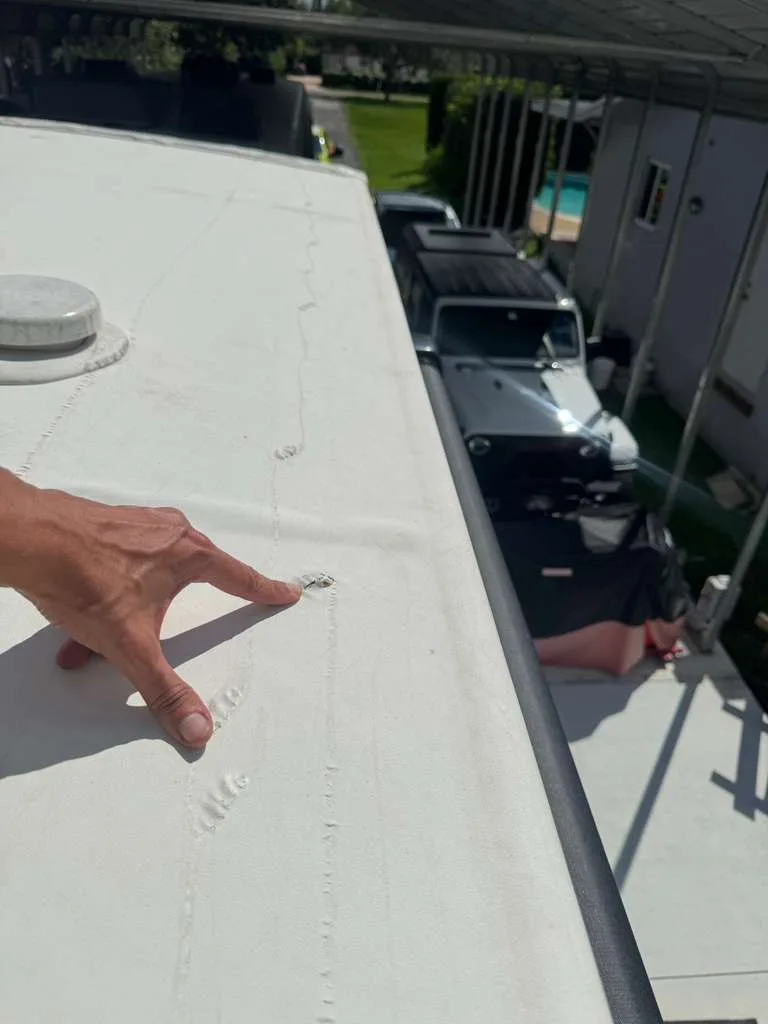
Matched to the original substrate where possible, and to the manufacturer's specification for the structural grade required by the rafter spacing on that particular coach. The three materials in use on production coaches are luan composite panel, exterior-grade plywood, and aluminum decking substrate. Luan is the most common original material on coaches built before 2015; plywood in various grades from three-eighths to five-eighths inch covers most coaches built since then; aluminum substrate is used on high-end coaches and some Class A motorhomes where weight and moisture resistance are the priority.
The replacement choice is not arbitrary. Luan for luan maintains the original deflection characteristics, which matters for re-adhering a membrane that was initially bonded to that surface. Plywood for luan is a common upgrade that improves moisture resistance but adds weight, which affects the rear cap geometry on some coaches and can stress the rafters on older frames. We assess the rafter spacing, the original material, the coach weight rating, and the condition of adjacent sections before specifying the replacement substrate.
A vapor barrier goes down between the new decking and the membrane in every case, regardless of what was there originally. Many coaches built before 2010 had minimal or no vapor barrier, which is one reason the decking absorbed water so readily. A proper barrier - we use a 30-mil reinforced polyethylene or a Dicor-compatible underlayment depending on the membrane type above - slows future moisture migration dramatically and is the single addition that changes a decking repair from a temporary fix to a durable one.
What is involved in a full decking replacement on a 28-foot coach?
The full sequence is a moisture survey to establish the wet boundary, membrane removal and assessment, rafter inspection and subfascia check, decking removal section by section, rafter drying time if any members are wet, new decking installation with vapor barrier, and membrane re-bed or replacement above. On a coach where the membrane is also due for replacement, this is a significant job - typically one to two days of on-site work for a two-technician crew.
The drying step is the one that owners most often want to skip, and it is the one that most often determines whether the repair lasts. Wet rafters and subfascia members that are sealed over with new decking continue to deteriorate from the inside. If the meter reading on a rafter member is above twelve percent moisture content, we allow drying time or use a targeted heat application before the new substrate goes down. That adds time, but a decking repair done over wet framing is a decking repair that will fail again within two to three seasons.
For coaches where the damage has reached the subfascia - the perimeter framing that the sidewall cap attaches to - the repair includes replacing the deteriorated framing sections and re-securing the cap attachment points. That is structural work rather than cosmetic, and it is the category that justifies the higher end of the pricing range. The structural assessment is included in every survey we do on a coach with a soft roof, because finding subfascia damage after the new decking is already down is a significant setback for everyone involved.
What Does Mobile RV Roof Decking Repair Cost?
These are typical ranges for mobile service across Florida. The notes column explains what each line item covers.
| Service | Typical Range | Notes |
|---|---|---|
| Service call + moisture meter survey | $299 - $399 | Pinless meter survey; identifies soft sections before any cutting |
| Decking repair (per 8 sq ft section) | $320 - $950 | Luan, plywood, or aluminum substrate |
| Subfascia and rafter repair (per section) | $450 - $1,400 | Structural members; requires coach assessment |
| Full decking replacement (28-ft coach) | $2,200 - $5,500 | Includes moisture barrier; completed before membrane work |
| Moisture inspection report only | $95 - $195 | Written report; useful for insurance or purchase decisions |
Service call (trip charge + first hour) is $299-$399 depending on location - confirmed at booking. Repair ranges below represent labor and materials after the first hour and reflect national averages for mobile service (2025 data). Call (888) 702-6880 for an exact quote on your coach and location.
Membrane replacement, if required above the new decking, is quoted separately. Most decking jobs require at minimum a section membrane reseal; full membrane replacement is an additional line item when the membrane has exceeded its service life.
Decking repair questions RV owners ask us
How does water get under the membrane and into the decking?
At a seam, fastener, or penetration seal first - then by lateral migration across the top face of the decking rather than through it. Water enters at the weak point, lands on the porous decking surface, and travels sideways under capillary action before gravity ever pulls it down through the rafter bays. The wet zone is almost always six to eighteen inches larger than the soft patch underfoot, which is why a pinless meter survey across the whole roof is the only honest way to scope the job before cutting anything.
What does soft decking feel like when walked on?
Early-stage wet decking feels slightly spongy underfoot - a fraction of an inch of give that is easy to misread as insulation flex rather than compromised wood. As delamination progresses the flex becomes pronounced and the membrane dimples visibly when weight is applied. At that stage the decking has lost structural integrity and any walk on the roof risks punching through. If you feel any give underfoot on your RV roof, get a meter survey before walking it again.
Can soft decking be repaired without replacing the roof membrane?
Sometimes. A rubber EPDM membrane that is still within its service life can often be peeled back cleanly, folded to the side, and re-adhered after the decking below is replaced. TPO membranes are thermally welded and less forgiving of being lifted without heat equipment. Fiberglass roof skins generally cannot be lifted at all. In Florida, where coaches often go through a full season before the soft spot is addressed, the membrane above deteriorated decking is typically overdue for replacement anyway - so the cost calculation usually favors a combined job rather than trying to preserve a membrane that has been sitting over wet wood.
How long can I wait to fix soft decking before it becomes a bigger problem?
In Florida the answer is weeks, not seasons. Heat and humidity accelerate mold colonization of saturated luan composite within days, and each rain event expands the wet zone laterally into adjacent dry decking. Owners who wait through a wet season consistently find that the repair scope has doubled and the subfascia members at the perimeter are now involved. The moisture survey cost is returned many times over in avoided escalation if the problem is addressed when it is first felt underfoot rather than watched through summer.
Does insurance cover water-damaged RV roof decking?
Comprehensive policies cover sudden and accidental damage. Gradual water damage from a slow seal failure is typically excluded as a maintenance issue. The documentation that defines which category applies is a dated moisture inspection report with meter readings. Getting that report before you call the insurer - rather than after a denial - is the sequence that produces the best outcome. Our written inspection report at $95-$195 is sometimes the most valuable document in the claim.
Sources
- Lippert RV structural resources - RV roof and sidewall structural specifications for repair standards.
- Dicor moisture barrier products - Underlayment and vapor barrier products between decking and EPDM membrane.