How to Check Your Own RV for Water Damage, Room by Room
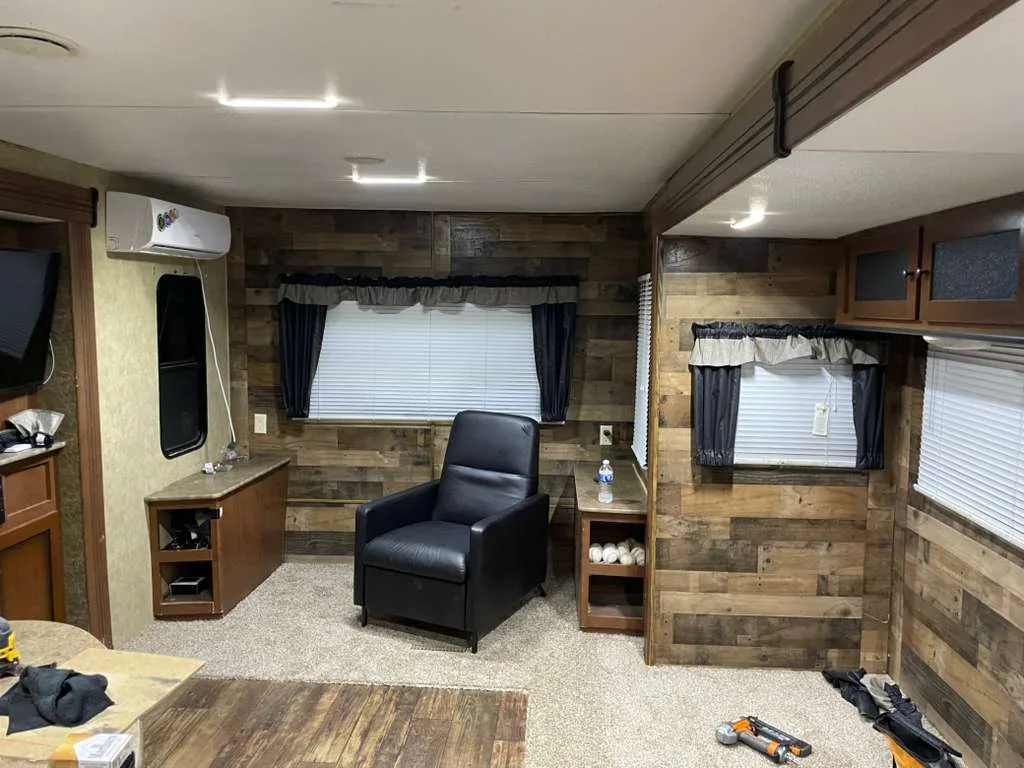
Water damage announces itself in a set order: smell first, then softness underfoot, then fasteners backing out, and only last a visible stain. By the time you can see it the structure has usually been wet for months. Checking with your nose and your hands twice a year finds it two stages earlier, and costs nothing at all.
Why does smell come before anything visible?
Because the insulation inside the wall gets wet long before the panel you are looking at does.
An RV wall is a sandwich: outer skin, foam, a wooden frame, an inner panel. Water that gets past the skin sits in that cavity, where it has nowhere to evaporate to. The organisms that produce a musty smell start working there while the visible surface is still perfectly dry.
That is why the smell is strongest when you first open a coach that has been shut for a week, and why it fades once air is moving - which is exactly when most owners decide it was nothing.
Trust the first thirty seconds. If a closed coach smells musty on opening and fresh an hour later, that is not the coach airing out, it is the coach telling you where to look.
Where do you press, and what are you feeling for?
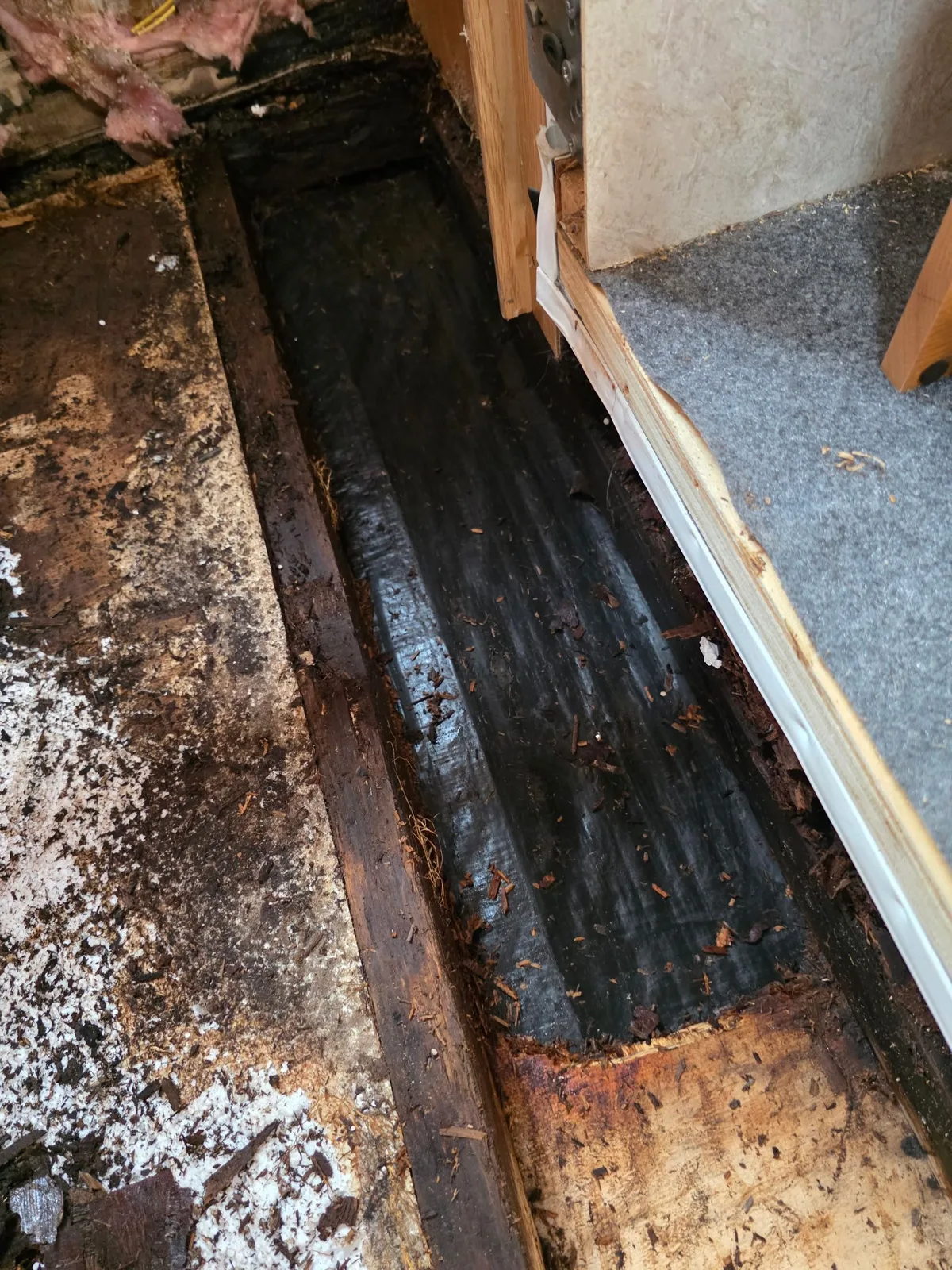
Along the walls at floor level, around the entry step, under windows, and in the corners of every slide room.
You are feeling for give. Sound flooring over sound decking is firm everywhere. A section that flexes under normal weight, or that feels spongy compared with a foot away, has decking underneath that has lost its strength.
Walls are the same test with your palm. Press flat rather than poking - a panel that moves inward slightly, or that feels soft rather than solid behind, is reporting the frame it is bonded to.
Work the perimeter rather than the middle of rooms. Water collects at the lowest edge, so the join between wall and floor is where it shows first. Take your shoes off for it. You will feel a difference through a sock that you will walk straight over in boots.
What do screws and trim tell you?
More than almost anything else, because they are reporting the condition of wood you cannot see.
A screw holds because the wood around it holds. When that wood softens, the screw loses grip and works its way out under vibration. A row of screws standing slightly proud along a ceiling panel or a cabinet rail is a direct measurement of the material behind them.
Trim that has lifted at one end, or a cabinet that has started to sag away from the wall, is the same signal at a larger scale.
The useful thing about this sign is that it is unambiguous. Screws do not back out for cosmetic reasons, and tightening them without asking why is how a small problem gets hidden for another season. It is also the sign owners most often fix without investigating, which is why it is worth naming.
Which windows and seams matter most?
The ones facing the weather, the ones above something valuable, and every seam where two panels meet.
Window frames are bedded in butyl that hardens with age. Once it does, water runs behind the frame and down inside the wall, which is why the stain never appears at the window - it appears somewhere lower and to one side.
The entry door is the same story with more movement, because it gets slammed. So is the seam where the sidewall meets the front or rear cap, which flexes every mile the coach travels.
Check them from outside for lifted or cracked sealant, then from inside for staining at the bottom corners of the same opening. The two together tell you whether it is getting in and where it is going. Doing both halves in one pass takes a few extra minutes and answers the question properly.
What should you check underneath?
The underbelly cover, and specifically whether it is sagging or stained anywhere.
Most coaches have a fabric or plastic membrane closing off the underside. It is there to keep road spray out, and it also catches anything leaking from above - which makes it a very useful indicator if you actually look at it.
A section that has dropped or bellied is holding water. A stain running along a frame member points at where it entered. Neither is visible from inside the coach, and neither shows up on a walk-round at eye level.
This is also where a plumbing leak declares itself before anything appears inside, which is the one advantage plumbing leaks have over roof leaks. A torch and two minutes on your knees at each side of the coach covers it, and almost nobody does it.
How do you tell old damage from active damage?
By whether it changes, which means checking the same spots twice rather than once.
A stain that is dry, hard-edged and the same size in three months is historical. Something got wet once, it was dealt with or it dried, and the mark is cosmetic. A stain with a soft edge that has grown, or that darkens after rain, is active and still being fed.
The same applies to softness. Damage that has stabilized feels the same each time. Damage that is spreading covers more area at each check.
That is the argument for photographing what you find with the date on it. Comparing two photographs answers in seconds what guessing cannot answer at all, and it is also what an insurer will want later. Two dated photographs three months apart settle it better than any amount of prodding.
What does a moisture meter add that your hands do not?
Numbers, and the ability to see wet material that still feels solid.
Hands find damage that has already destroyed the material's strength. A meter finds wet material well before that, which is the entire difference between a repair and a rebuild. Wood can read soaked and still feel perfectly firm underfoot.
It also maps the edges. Readings taken in a grid across a wall or floor show how far the wet area actually extends, and it is nearly always further than the soft patch suggests. That map is what a repair is cut back to.
And a reading is evidence in a way that an opinion is not, which matters a great deal if the damage ends up going to an insurer. Our inspection service is built around exactly that. It is the one tool on this page worth paying somebody to bring.
What do you do the day you find something?
Photograph it, find the source, and stop water arriving before worrying about the damage itself.
Photographs first, dated, before anything is moved or dried. That set is what supports a sudden-and-accidental account later, and it cannot be recreated afterwards.
Then find where it is coming in, which is almost never directly above what you found. Water travels along the decking and down inside walls, sometimes several feet, before it reaches somewhere it can drip through.
Get it dry and keep it dry while the repair is arranged - in Florida humidity that means active dehumidification rather than open windows. Our water damage service covers what the repair involves once the extent is known. None of those three is the repair. They are what stops the damage growing while the repair is arranged, and they are all things you can do the same afternoon.
Questions owners ask about spotting water damage
Is a musty smell always water damage?
Not always - a coach shut up in Florida humidity can smell stale without any leak, because the air itself carries so much moisture. What separates them is whether it is general or localised. A smell that is stronger in one corner, or that returns to the same spot, is coming from wet material rather than from stale air.
How often should I do this check?
Twice a year, at the same time as the roof inspection, plus any time the coach has been through a storm or has stood unused for a season. It takes about twenty minutes once you know the spots, and it is the cheapest maintenance there is.
Can I dry out a wet wall myself?
You can help, and you cannot confirm it. A dehumidifier running in a closed coach does real work. What you cannot do without a meter is establish that the material inside the wall is actually dry, and sealing or refinishing over damp framing simply restarts the process.
Does delamination mean the coach is finished?
No, and it does mean the damage has reached a late stage. Delamination is the inner panel separating from the frame it was bonded to, which normally means that frame has been wet. A localised area is a genuine repair; a sidewall that has failed along its length is a different conversation.
Should I buy a used RV with a soft spot?
Only with a moisture survey first and the result priced into what you offer. A soft spot is the visible end of something larger, and the gap between a floor section and a structural rebuild is not something you can judge from the doorway.
Will my insurance pay for it?
It depends entirely on whether the cause reads as sudden and accidental or as gradual deterioration, and that argument is won or lost on documentation you gathered before the claim. Dated maintenance photographs and receipts are what make the difference.
Sources
- EPA - mold and moisture - Why the smell arrives before anything visible, and why removing the source matters more than cleaning.
- InterNACHI - inspection standards - Inspection practice for moisture intrusion and structural assessment.
- National Weather Service - Tampa Bay - Regional humidity, which is why a wet cavity here does not dry out between rain events.
- Dicor - sealant installation instructions - Manufacturer guidance on the seals whose failure lets most of this water in.