RV Roof Inspection: What to Look For, Twice a Year
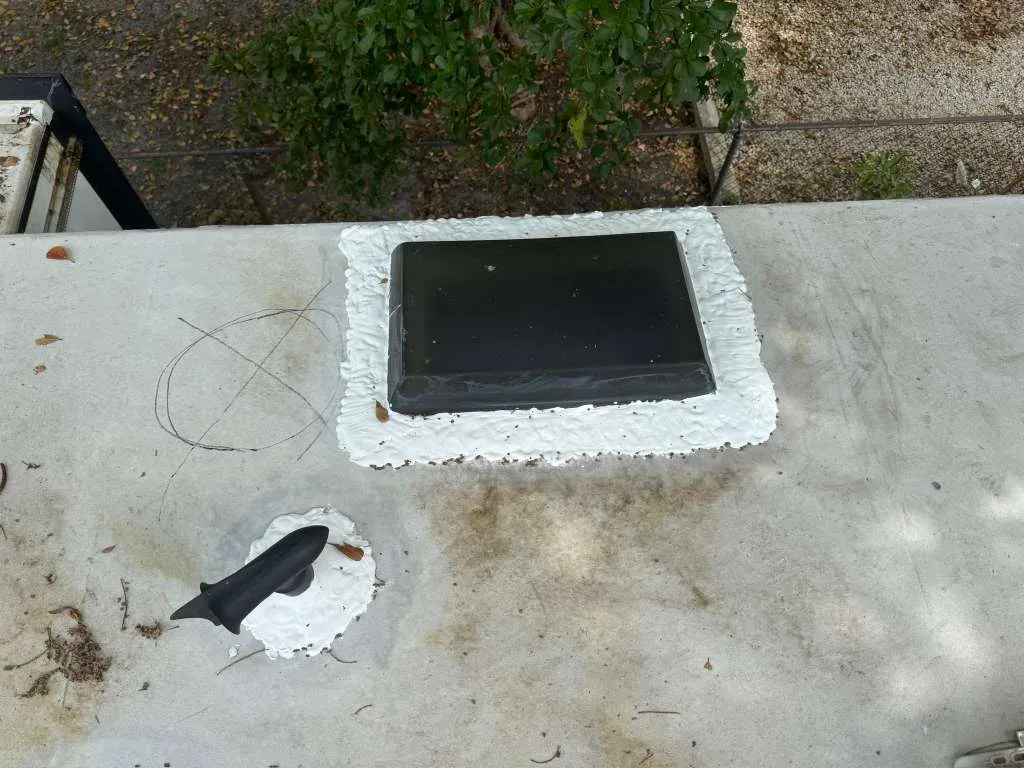
Inspect the roof twice a year and you will find nearly every problem while it is still sealant rather than structure. You are looking for three things: sealant that has crazed or lifted at an edge, fittings that have loosened, and any softness underfoot. None of that needs tools, and finding it early is the difference between a bead of sealant and a floor.
What are you actually looking for up there?
Three things, and they are all visible without touching anything: sealant condition, fitting security and any give underfoot.
Sealant is the consumable. Every hole cut through the membrane - the air conditioner, vents, skylights, antennas, solar mounts, the refrigerator flue - is sealed around, and that bead is what fails long before the fitting does.
Fittings are the second. Screws back out slowly with vibration and temperature cycling, and a fitting that has lifted even slightly breaks the seal around it whether the sealant looks intact or not.
Underfoot is the third and it is the one that matters most. Any sponginess means water has already been sitting on the decking, and at that point the inspection has stopped being maintenance and become a diagnosis. Those three, in that order, and you can do the whole pass in about twenty minutes once you know what you are looking at.
How do you tell sound sealant from failing sealant?
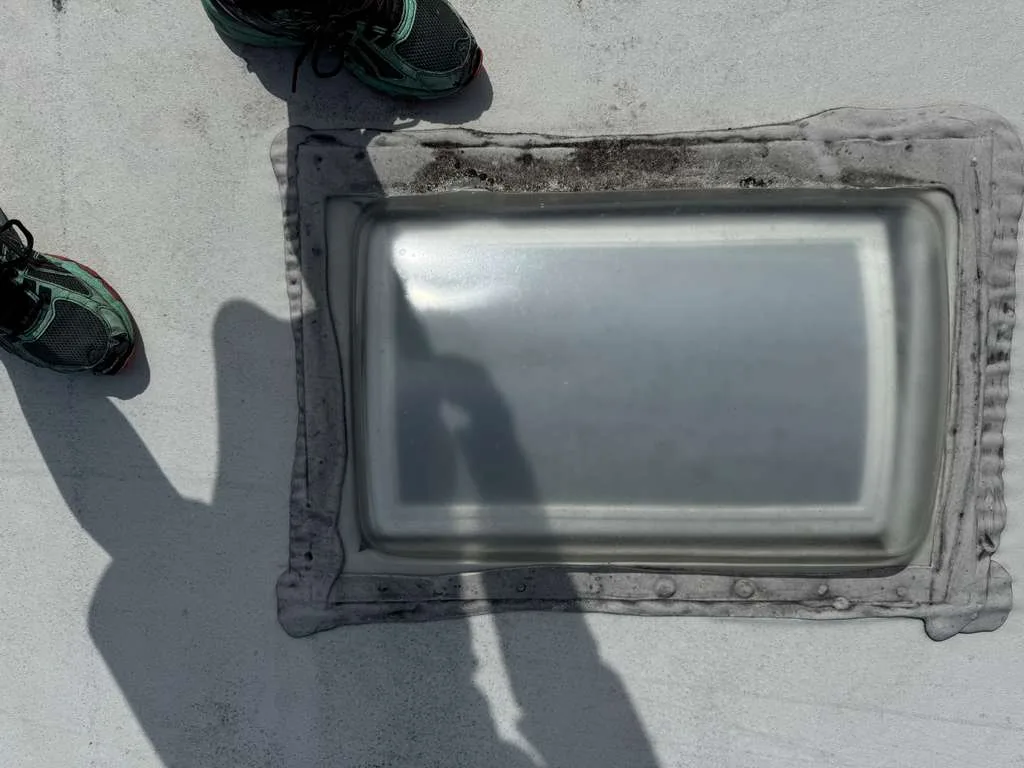
By its edges and its surface, not by whether it is still physically there.
Healthy sealant is flexible, uniform in color, and continuous where it meets both surfaces. Failing sealant goes chalky first, then develops a network of fine cracks, then lifts at one edge. That progression is visible for a long time before water gets through.
The edge is where to look. A bead that has pulled away from the fitting even slightly is finished, however good the middle of it looks, because water follows the gap rather than sitting on the surface.
Press it gently with a fingernail. Sound sealant gives and springs back. Sealant that stays dented, or that crumbles, is telling you its life is over. Learning what a healthy bead feels like on your own coach, while it is still healthy, is what makes the next inspection quick and certain.
Which fittings deserve the most attention?
The air conditioner, the front and rear cap seams, and anything that was added after the coach was built.
The air conditioner is the largest opening in the roof and it sits in a gasket that compresses over time. It is also the heaviest thing up there, so it works its mounting every mile.
The cap seams are next. The front and rear caps meet the roof at a joint covered by a strip of sealant, and that joint flexes constantly because the coach is not rigid. Cracking along a cap seam is extremely common and easy to miss because it runs across rather than around.
Aftermarket additions are third and often the worst. Solar mounts, antennas and satellite domes fitted later are frequently sealed less carefully than the factory fittings beside them. It is worth checking those three closely and giving the rest a quicker look.
When should you not walk on the roof at all?
When the manual says it is not walkable, when it is wet, and any time it already feels soft.
Not every RV roof is rated to carry a person. The owner's manual is the authority on that rather than how solid it looks, and a roof that is not rated will flex enough to break seals you were trying to inspect.
Wet is the second. A membrane roof with any moisture on it is genuinely dangerous, and a fall from that height is not a small accident.
Soft is the third, and it is absolute. A roof that already gives underfoot has decking that has lost its strength, and standing on it makes the damage worse and risks going through. Inspect that one from a ladder at the edge and call somebody. There is no inspection worth getting hurt for, and a ladder at the edge sees most of what matters anyway.
What does cleaning actually do for a membrane?
More than owners expect, because what accumulates up there is what degrades the surface.
A rubber roof oxidizes and sheds a chalky residue - that is normal and it is the membrane protecting itself. What is not helpful is that residue combining with pollen, dust and organic debris into a layer that holds moisture against the surface continuously.
Washing it a couple of times a year removes that layer and lets you actually see the sealant you are inspecting. A roof covered in chalk hides exactly the cracking you are looking for.
Use a cleaner intended for the membrane type. Petroleum-based products attack rubber roofs, and something that works beautifully on fiberglass can shorten the life of EPDM considerably. Doing it before the inspection rather than after also means you are looking at the roof rather than at a season of dirt.
How often, realistically, in this climate?
Twice a year as a minimum, plus after any named storm, and that second one is not optional here.
The reason Florida is different is ultraviolet plus volume of rain. Sealant that would last several years further north crazes faster here, and when it does open up it gets tested immediately by rain arriving in quantity rather than as drizzle.
Spring and autumn are the sensible slots - one before the storm season and one after it. A coach that lives outdoors year-round, which is most of them here, is at the demanding end of that.
After a storm is separate and worth doing properly. Branch impact and debris damage do not announce themselves and are exactly the kind of sudden cause an insurer will pay for if you find it promptly. Two scheduled looks and one after each storm is the pattern that actually keeps ahead of it here.
What should you photograph, and why?
The whole roof and every fitting, dated, every single time - because that record is worth money later.
When a leak eventually appears, the argument with an insurer is almost always about whether the cause was sudden and accidental or gradual deterioration. Policies pay for the first and exclude the second.
A dated series of photographs showing sound sealant six months ago and damage now is the single strongest evidence that something happened rather than something rotted. Without it, the burden falls on you and it is difficult to meet.
Keep receipts for any resealing work with them. Together they are a maintenance record, and a maintenance record is what turns a contested claim into a paid one. It takes two minutes with a phone and it is the cheapest insurance on this entire page.
What findings mean stop and call someone?
Softness anywhere, a stain inside, a smell inside, or sealant that has failed along a cap seam.
Softness and interior stains both mean water has already reached the structure, and neither is fixed by sealing above it. Those need a moisture survey to find out how far the wet area extends before anybody decides what the repair is.
A musty smell in a closed coach is the earliest of the three and the one most often dismissed. It is water in the insulation and it appears well before anything is visible.
Cap seam failure is the fourth because it runs the width of the coach and lets water in along its whole length. Our roof repair service covers what each of those turns into, and our damage guide covers what to look for inside.
Questions owners ask about roof inspections
Can I just put a coating over the whole roof instead of inspecting it?
A coating addresses an aged membrane, not a leak, and applying one over an active leak seals water in and hides it. The honest sequence is inspect, fix what is failing, confirm the decking is dry, and only then decide whether the membrane itself justifies a coating.
What kind of roof do I have?
EPDM is rubbery and chalks white as it ages. TPO is smoother and stays whiter. Fiberglass is hard and glossy. It matters because cleaners and sealants are not interchangeable between them, and the wrong product shortens the life of the repair.
How much sealant should I be adding at an inspection?
Ideally none. Inspection is about finding what has failed so it can be cut back and redone properly. Adding fresh sealant on top of a failing bead traps water underneath rather than excluding it, and it hides the problem from the next inspection.
Does a cover help or hurt?
It helps with ultraviolet, which is the main thing ending sealant here, and it hurts if it traps moisture underneath or chafes in the wind. A breathable cover that actually fits is worth the extra money; a cheap tarp is usually worse than nothing.
Is a soft spot always water damage?
Nearly always, and the exception is a delaminated panel that never got wet. Either way it is not something to establish by pressing harder. A moisture meter answers it in minutes without opening anything.
Can you do the inspection for me?
Yes, and it is worth doing professionally at least once so you know what your particular roof looks like when it is healthy. After that the twice-yearly look is genuinely something an owner can do, which is why this page exists.
Sources
- Dicor - sealant installation instructions - Manufacturer specification for which sealant belongs on which surface and how failed sealant must be removed.
- National Weather Service - Tampa Bay - Regional rainfall and storm frequency behind the twice-yearly interval recommended here.
- EPA - moisture and mold - Why trapped moisture in a structure matters beyond the visible damage.
- Lippert Components - master manuals - Documentation for the roof structures, vents and fittings on most coaches.