What a Professional RV Pre-Purchase Inspection Actually Covers
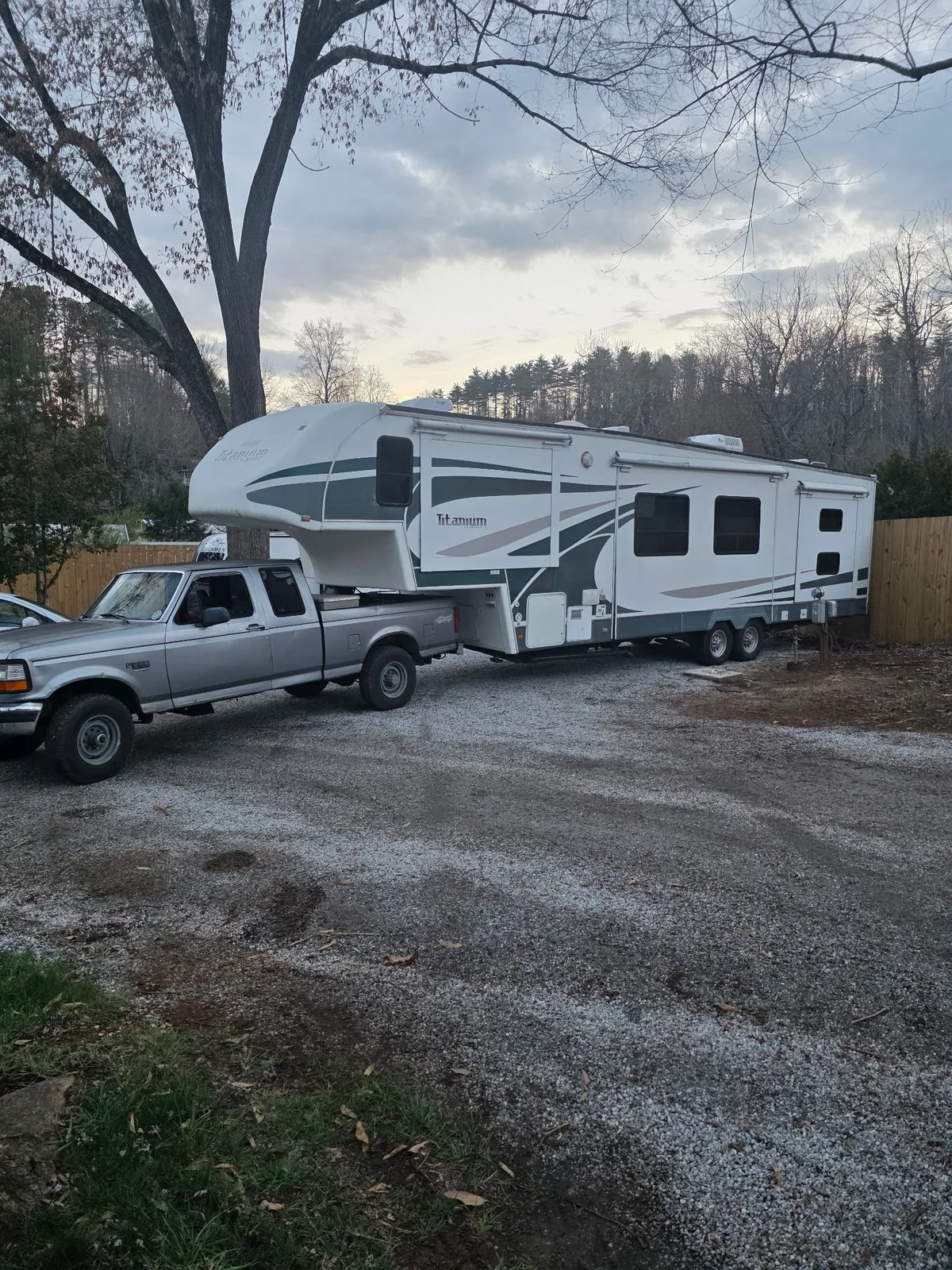
A walk-through with a seller tells you the selling points. A professional pre-purchase inspection tells you what the selling points are hiding. An NRVIA-certified inspector covers more than one hundred items in a defined protocol - the roof membrane, the LP system under pressure, the plumbing under pressure, the electrical loads, and every slide-out seal. That report is what tells you what a coach will actually cost to own.
What makes a pre-purchase inspection different from a walk-through?
A walk-through covers what is visible on the surface. An inspection covers what is functioning correctly under load, what is under pressure, and what is behind panels.
An inspector brings water pressure test equipment that pressurizes the plumbing system to check for leaks in lines that are routed inside walls - lines that a visual inspection cannot see and that may be seeping slowly without any visible sign. They bring an LP detector that checks for gas at every fitting in the propane system, not just at the appliance connections that are accessible during a walk-through.
They test every 12-volt and 120-volt circuit under load, which means turning on every light, every fan, every appliance, and measuring the results rather than assuming they work because they turned on briefly. A circuit that works for thirty seconds and then trips is a fault. A circuit that draws less current than it should is a fault. Neither shows up in a casual walk-through.
The written report they produce at the end is the document that changes the negotiation. It converts observations into documented findings with specific locations, and a seller who knows about a problem will either have disclosed it or will need to account for it once the report is in your hand.
What does the inspector do on the roof that you cannot?
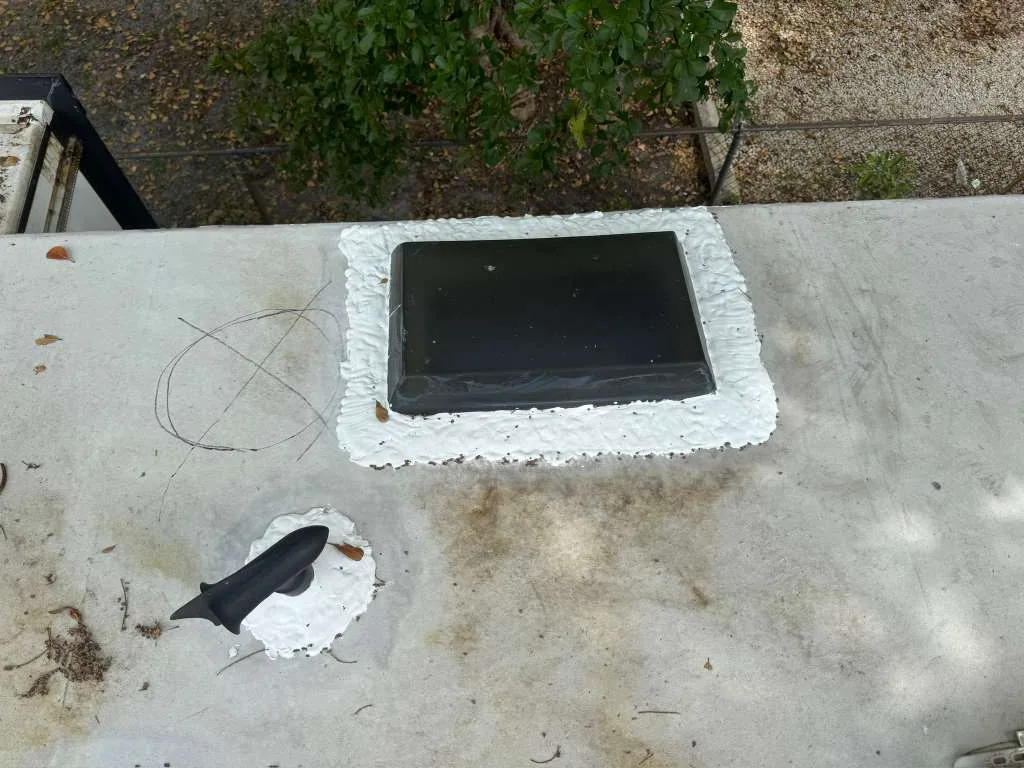
They walk it systematically and check every square foot of membrane, every penetration seal, and every transition point between the membrane and the sidewall cap. They are looking for soft spots in the decking, lifting at seams and edges, crazing or cracking in the membrane surface, and sealant condition around every fitting.
A soft spot in the roof decking means the plywood or composite substrate beneath the membrane has absorbed water and lost structural integrity. That softness is the result of months or years of water entry, and the interior damage below it is typically more extensive than the spot itself suggests.
They inspect the drip edge and the roof-cap transition on all four sides of the coach. These are the areas where thermal cycling opens gaps most readily, and a gap at the front or rear cap can let water run behind the interior ceiling panels for an entire wall section. That is a large repair compared to a failed vent sealant.
On Florida coaches specifically, they note the sealant type and apparent age. Original factory sealant on a coach that is more than five years old in Florida is likely past its service life even if it has not yet visibly separated. An inspector who documents sealant condition by area gives you a specific maintenance roadmap.
How does the plumbing pressure test work?
The inspector connects an air pump to the water inlet and pressurizes the freshwater lines to a set pressure - typically forty to fifty PSI - and holds it for a defined period, usually five to ten minutes. A pressure drop during the hold period indicates a leak somewhere in the system.
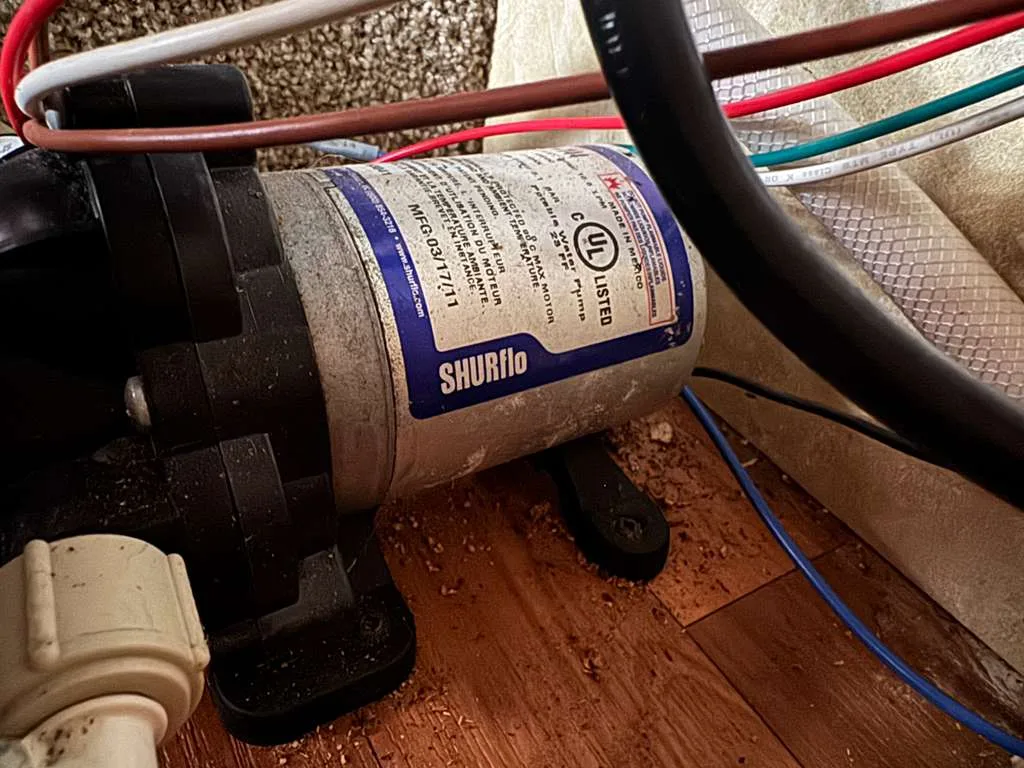
The location of a leak is found by listening for air escape and by checking connections at each fixture, valve and joint. Many plumbing leaks in an RV are at push-fit connectors rather than in the pipe itself, and a connector that is weeping at a connection inside a cabinet base may not produce visible water during normal use - the water soaks into the cabinet substrate and dries between uses.
A coach that fails the pressure test requires a leak location and repair before the system can be trusted. In a Florida coach, a slow plumbing leak is a mold risk rather than merely an inconvenience, because the humidity level inside the cabinet base is enough to establish mold even when the water loss per day is small.
The hot water side is tested separately because the water heater bypass valve isolates the tank. An inspector who tests both the cold and the hot lines separately is being thorough. One who only tests the cold line is missing the half of the system that is more likely to have problems on an older coach.
What does the electrical load test reveal?
Which circuits are actually working correctly, which are partially working, and which have the fault profile of an impending failure rather than a current failure. A circuit that works intermittently under load is more concerning than one that does not work at all, because it suggests a loose connection that will worsen with vibration.
The inspector measures current draw at the coach panel for major loads - the AC unit, the converter, the water heater, and the refrigerator. A circuit that draws significantly less current than specified may have a load that is failing internally. A circuit that draws more current than specified has a resistance fault somewhere in the wiring.
Shore power connection and the coach's incoming supply are also checked. A 30 or 50-amp inlet that shows signs of arcing, discoloration or heat damage at the connections has had an overload event and may have wiring damage further down the circuit that is not visible at the inlet itself.
In Florida, humidity-driven corrosion on ground connections is a common finding that a load test can catch. A circuit that tests as working at low load but fails or dims under full load has a ground connection that is maintaining contact under low current but failing when the current demand rises. That is a safety issue in a circuit that serves a high-draw appliance.
Why is the LP system tested separately?
Because the LP system is a pressurized combustible gas system and a leak in it is a fire and explosion hazard rather than a maintenance inconvenience. An inspector who skips the LP pressure test or who only checks the appliances visually without testing the lines is not doing a complete inspection.
The LP pressure test involves closing the appliance valves, turning on the tank valve to pressurize the lines, then turning off the tank valve and monitoring the line pressure with a gauge. A pressure drop over five minutes indicates a leak somewhere in the line. The leak is then located using a leak detector solution or an electronic LP sniffer.
The regulator is inspected separately because it has a defined service life. A regulator that is more than ten years old has typically reached the end of its manufacturer-recommended service life regardless of visible condition. An inspector who notes regulator age in the report is flagging a maintenance item that should be addressed before the LP system is used in a new-to-you coach.
Florida coaches can have regulator corrosion accelerated by coastal humidity and salt air. A regulator that has spent years on a coastal coach should be inspected more carefully than one from an inland coach, regardless of age.
What does the inspection report say about slide-outs?
Each slide-out is cycled multiple times during the inspection and evaluated for smooth travel, equal side-to-side movement, and seal condition all around the perimeter. A slide-out that hesitates, binds, or racks during a cycle is flagged in the report with the specific observation.
The wiper seals on both the outside bottom of each slide-out and the inside perimeter seals are inspected and their condition noted. A seal that is cracked, hard, torn, or has lost its profile is noted as a maintenance item at minimum, and the inspector may note whether water entry is apparent from the seal condition.
The drive mechanism - whether electric, hydraulic, or Schwintek rail-driven - is evaluated during operation. Unusual sounds, inconsistent travel speed, or partial racking between cycles are all findings that go in the report with enough detail for a technician to quote a repair.
The wall condition adjacent to each slide-out is checked for water damage indicators, because the slide-out perimeter is one of the most common water entry points on a coach and the adjacent wall section is where the damage appears first. An inspector who evaluates the walls next to each slide-out rather than just the slide-out itself is connecting the mechanism to its most common consequence.
How do you use the inspection report to negotiate price?
Take each finding that requires repair or replacement and get an estimate for it. Some inspection reports include approximate repair costs; if yours does not, call a service center with the specific finding from the report and ask for a ballpark. The total repair estimate is the number you bring to the negotiation.
The negotiation approach depends on how serious the findings are. Minor maintenance items - sealant that needs refreshing, a seal that needs conditioning - are the kind of items you can handle yourself or incorporate into a price reduction of a few hundred dollars. Structural findings like roof decking damage or framing affected by water intrusion are leverage for a more significant price reduction or a conditional sale contingency.
A seller who immediately agrees to every reduction requested on a detailed report may have known about the issues. A seller who is genuinely surprised by specific findings is more likely to negotiate in good faith because the inspection caught something they did not know about. The reaction to the report tells you something about the negotiation that the report itself does not.
A finding that the seller is unwilling to address or reduce for is information. It means the actual market price of the coach, in its documented condition, is the price they are selling at. Only you can determine whether that price is acceptable given what you now know about the condition.
What does NRVIA certification mean for the inspector?
It means the inspector has completed a defined training curriculum covering RV systems, passed a written examination, and agreed to follow an established inspection protocol. The protocol standardizes what is checked and in what order, which is what makes the report comparable across coaches and meaningful to a technician who did not perform it.
The inspection covers the structural components, the roof and exterior, the interior systems, all appliances, the electrical system, the plumbing, the LP system, and the slide-outs. Each area follows a checklist that the inspector works through methodically rather than focusing on whatever catches their eye first.
The certification is not a guarantee that every finding will be caught - no inspection is. What it does guarantee is that the inspector covered a defined set of items and documented what they found in a format that is usable. An uncertified inspector who simply walks through the coach may have more practical experience than a recently certified one, but the documentation will not be comparable.
Our water damage service and our roof repair service are the two most common services that follow a pre-purchase inspection on a Florida coach. The findings in the report tell us exactly where to begin.
Questions buyers ask about RV pre-purchase inspections
How long does a pre-purchase inspection take?
Two to three hours is typical for a thorough inspection of a standard Class A, Class C or fifth wheel. A larger coach with more slide-outs or more systems to evaluate may take longer. The time is dominated by the roof inspection and the system testing, not by the walk-through portion.
Can the seller refuse to allow a pre-purchase inspection?
They can. A seller who refuses a pre-purchase inspection on a coach being sold as functional is telling you something about the condition they are not willing to disclose. At that price point, the refusal itself is diagnostic information. Private sellers have no obligation to allow inspections, but the practical implication of a refusal is significant.
Should the inspection happen before or after an offer?
Ideally, the offer is conditional on a satisfactory inspection result, which means making the offer and writing in the inspection contingency. This gives you a defined exit point if the inspection reveals problems that change the value. An inspection before an offer is appropriate if the seller requires it or if the coach is particularly expensive.
What if the inspection finds something the seller already disclosed?
That is actually a useful result. It confirms that the seller's disclosure was accurate, which increases your confidence in the completeness of everything else they told you. A seller whose disclosures match the inspection findings is being straightforward, and that is meaningful information when you are buying a complex system like an RV.
Is a pre-purchase inspection worth it on a low-priced coach?
It depends on what 'low-priced' means relative to the inspection cost. On a coach priced at a few thousand dollars, an inspection that costs several hundred dollars is a large percentage of the purchase price but is still worthwhile if the coach is being purchased as a functional unit. If the coach is a parts unit or a project, the inspection adds less value because the condition is already expected to be poor.
What happens if the inspection finds water damage?
You get a repair estimate and use it to renegotiate, or you walk away. Water damage has a wide cost range depending on extent - surface mold remediation at one end, structural framing replacement at the other. The inspection report tells you which category you are in, and the repair estimate tells you whether the adjusted purchase price still makes sense.
Sources
- National RV Inspectors Association - The certifying organization for professional RV inspectors, including the inspection protocol and what a full inspection covers under their standards.
- US EPA - mold guidance - Standards for mold assessment and remediation that apply to water damage findings in a pre-purchase inspection report.
- US Fire Administration - fire prevention - LP system safety context, relevant to understanding why LP pressure testing is an essential component of a pre-purchase inspection.
- Dometic - documents database - Manufacturer maintenance specifications and service intervals for appliances and systems commonly evaluated during a pre-purchase inspection.