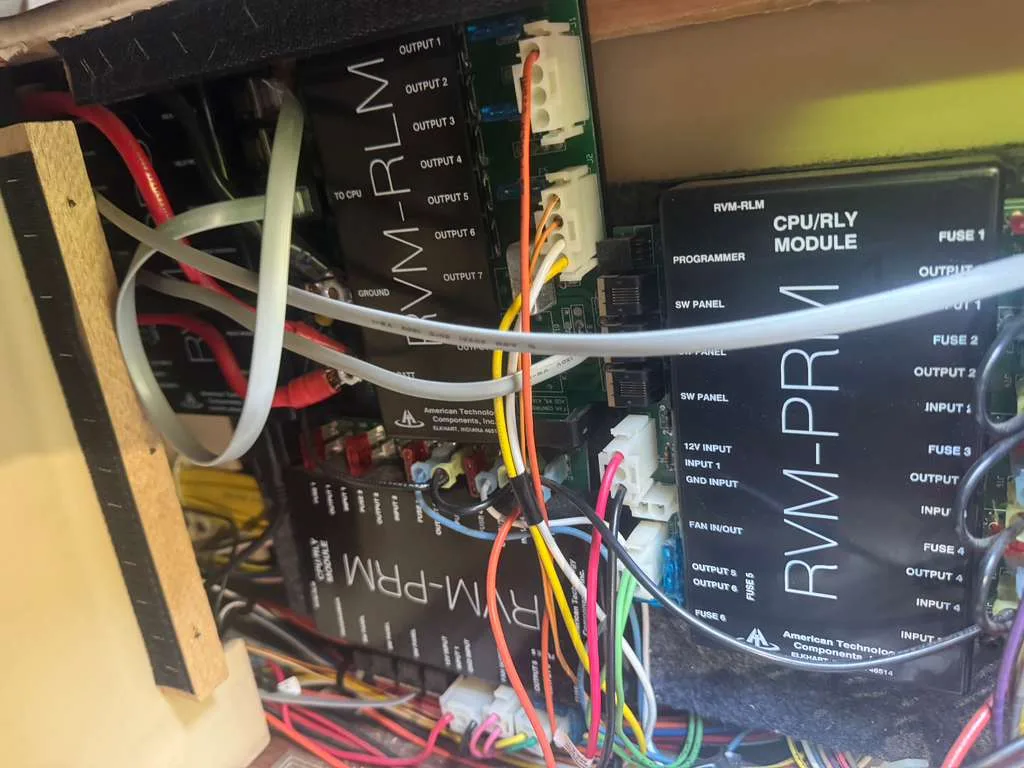
What the Automatic Transfer Switch Actually Does
The ATS sits between your two power inputs - the shore power inlet on the outside of the coach and the generator output - and your coach distribution panel. Its job is to monitor both sources continuously and connect whichever one is live to the panel, with one absolute rule: never both at the same time. Connecting shore power and generator power simultaneously would create a phase conflict that damages both sources and every appliance between them, which is why the ATS interlock is mechanical rather than software. The contactors are physically built so only one can close at a time.
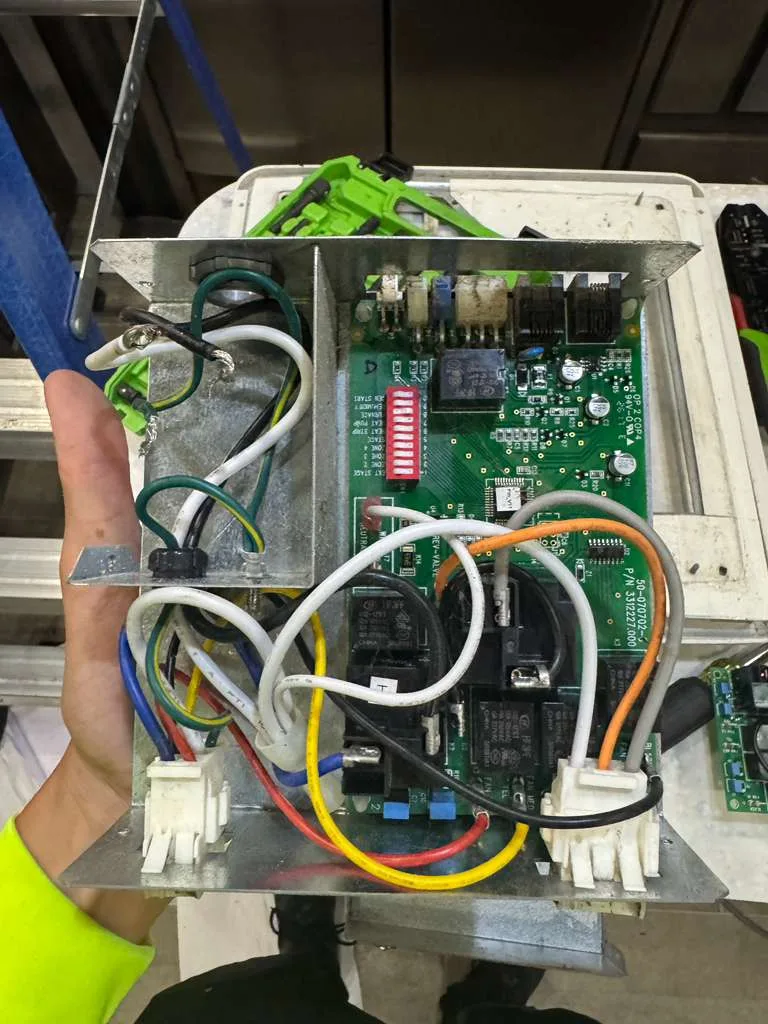
When shore power drops - pedestal trips, campsite outage, you unplug and drive to a new site - the ATS senses the loss within a fraction of a second. It then waits a brief settling delay, typically between one and three seconds depending on the unit, before signaling the generator side contactor to close. That delay exists so the generator has time to stabilize voltage and frequency before the coach loads hit it. When shore power returns, the sequence reverses: the ATS waits for shore to stabilize, opens the generator contactor, then closes the shore contactor. The coach never knows the difference.
Diagnosing an ATS Failure vs a Generator or Shore Power Problem
The fastest way to isolate the ATS as the fault is to verify both power sources independently before touching the switch. Shore power verification is simple: plug a lamp or small appliance directly into the pedestal receptacle, bypassing the coach entirely. If it lights, shore is fine. Generator verification requires starting the unit, letting it warm up for at least thirty seconds, then measuring AC voltage at the generator's output terminals - not at the coach receptacle, because the ATS sits between those two points. A reading of 120 volts or 240 volts as appropriate confirms the generator is producing power. If both sources check out and the coach still has no power, the ATS is where to look next.
The click-but-no-transfer symptom is the most diagnostic single observation you can make. A click from the ATS chassis means the relay coil received a signal and energized - the control electronics worked, both sensing circuits saw the source they needed to see, and the command to transfer was issued. What did not follow is the contactor closing. The gap between coil energization and contactor movement is where the mechanical failure lives: worn or pitted contacts that no longer make reliable connection, a weakened return spring that cannot push the contactor all the way to the closed position, or debris in the contact cavity that physically blocks closure. This failure mode is common in Florida's coastal humidity, where salt air accelerates pitting of copper and brass contacts faster than inland environments.
The 30-Amp vs 50-Amp Difference - More Than Just Amperage
A 30-amp RV system and a 50-amp RV system are not the same circuit at different current ratings. A 30-amp system is single-phase: one hot leg, one neutral, one ground. The shore power plug has three prongs and the ATS manages two wires that carry power. A 50-amp system is dual-phase: two hot legs at 120 volts each, one neutral, one ground. The plug has four prongs and the ATS manages three current-carrying wires. The contactors inside a 50-amp ATS are physically larger to handle the higher load and the additional phase, and they are rated differently from the factory.
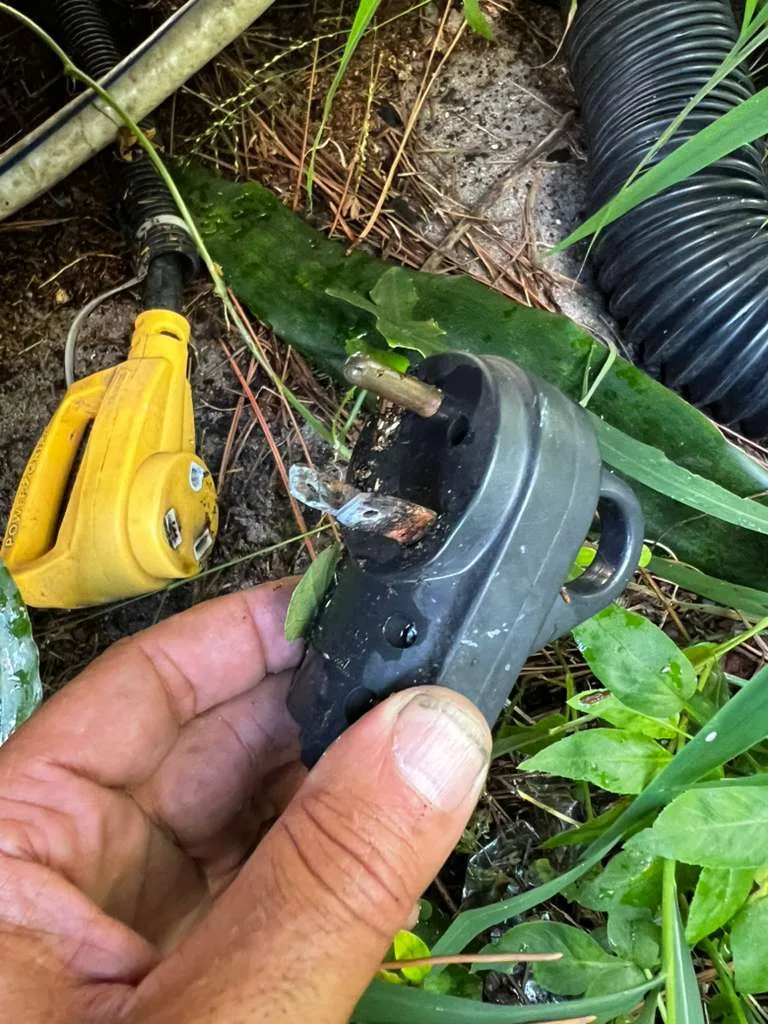
This matters at replacement because the two units are not interchangeable. You cannot fit a 30-amp ATS into a 50-amp system by adding an adapter or rewiring a connector. The wiring gauge, the breaker sizing, the inlet plug, and the ATS body must all match the system amperage. Class C motorhomes and most towable units - fifth wheels and travel trailers - are 30-amp. Class A motorhomes and large fifth wheels with heavy appliance loads are almost always 50-amp. When we dispatch, we carry both configurations so the diagnosis and replacement happen in a single visit.
When Only the Relay or Contactor Needs Replacing
A full ATS replacement is not always necessary. When the switch body - the housing, the sensing board, and all wiring connections - is in good condition and only the relay coil or contactor assembly has failed, replacing just that subassembly costs considerably less than a full unit. Progressive Industries and several other manufacturers supply replacement relay kits specifically for this scenario. The test is straightforward: if the housing shows no heat damage, the wiring connections are corrosion-free and properly torqued, and the sensing circuit tests correctly on both the shore and generator legs, the relay swap is the right call. If any of those conditions are not met, or if the unit is more than eight to ten years old in a Florida coastal environment, the economics usually favor a full replacement to avoid a repeat visit inside two years.
Emergency Bypass When the ATS Has Failed Completely
If the ATS has failed in the open position - meaning neither source can reach the coach - and you need power immediately, a licensed electrician can install a temporary hard-wire bypass. This routes one power source directly to the coach distribution panel, bypassing the ATS entirely. The generator must be fully disconnected from the system during a shore bypass, and shore power must be disconnected during a generator bypass. The interlock that the ATS provided is gone, so the disconnection discipline is the owner's responsibility. This is a legitimate emergency measure used by technicians in the field when replacement parts are not immediately available, but it should never be treated as a permanent repair. The ATS provides protection against accidental dual-source connection that the bypass eliminates.
Triton technicians carry ATS stock on the truck specifically to avoid leaving a coach in bypass mode. In practice, the emergency bypass is used as a staging step while we confirm the correct replacement unit is on board, or while a part is dispatched for next-day delivery on an uncommon configuration.
Combined ATS and Surge Protection Units
Several manufacturers - most notably Progressive Industries with their EMS-HW30C and EMS-HW50C models - produce units that combine the automatic transfer function with an electrical management system in one assembly. The combined unit monitors line voltage, frequency, and wiring faults on the shore power side before it allows the connection to close, adds surge suppression on both the shore and generator legs, and performs all the switching functions of a standalone ATS. For a coach that does not already have a hardwired surge protector, replacing an aging ATS with a combined EMS/ATS unit is often the correct choice from a total-cost perspective - one installation covers two functions and the unit communicates faults in plain language on a display panel rather than requiring a meter to diagnose future events.
The combined units are heavier and larger than standalone ATS assemblies, which occasionally creates a fitment issue in coaches where the original ATS is in a tight compartment. We check dimensions before ordering on any combined-unit install to confirm the new unit fits the available space and that the conduit entries align with the existing wiring routes.
What to Expect During a Triton ATS Service Call
When the technician arrives, the first step is verifying both power sources independently using the test sequence described earlier. Once the ATS is confirmed as the fault, the coach is de-energized completely before any work begins. The ATS is located - typically in a dedicated compartment on the driver's side exterior or in the wet bay - and the existing wiring is photographed before disconnection. This is a standard Triton practice that protects both technician and owner: if any wiring question comes up during installation of the new unit, the photo shows exactly what was there. The replacement unit is wired identically, torque-spec'd at all terminals, and the compartment is inspected for moisture intrusion before it is closed. Both power sources are then tested through the new switch under load before the service call is closed.
Total time on site for a standard relay or contactor replacement is typically sixty to ninety minutes. A full ATS swap on a coach with accessible compartment runs ninety minutes to two and a half hours. A combined EMS/ATS installation, where conduit may need to be extended and the display panel mounted in a new location, runs two to four hours depending on the coach layout.
RV Automatic Transfer Switch Replacement - Florida Pricing
| Service | Typical Range | Notes |
|---|---|---|
| Service call + ATS bypass test | $299 - $399 | Relay check and both power source verification included |
| 30-amp ATS replacement | $280 - $580 | Single-phase; most common in Class C and towable units |
| 50-amp ATS replacement | $350 - $750 | Dual-phase; Class A motorhomes and large 5th wheels |
| ATS relay / contactor only | $120 - $280 | When switch body is good but relay has failed |
| ATS with surge protection upgrade | $550 - $1,100 | Combined ATS and EMS unit; surge protection built in |
About these ranges: Prices reflect parts and labor for mobile service across Florida as of 2026. Final cost depends on coach type, ATS location accessibility, and whether a combined EMS/ATS unit is selected. These are national-average-informed ranges; your specific quote may fall above or below based on your coach configuration.
All service calls include the diagnostic test sequence at no additional charge when we complete the repair the same visit. Diagnostic-only calls are billed at the service call rate.
Frequently Asked Questions
What does an automatic transfer switch actually do in an RV?
The ATS monitors both shore power and generator power simultaneously and connects the coach to whichever source is live - never both at once. When shore power drops, the switch senses the loss, waits a brief settling delay, then closes the generator leg. When shore power returns, it reverses the sequence. The interlock is physical, not just software, so the two sources cannot feed each other and cause a phase conflict or back-feed injury at the campsite pedestal.
How do I know if my ATS is failing versus my generator or shore power?
Verify each source in isolation first. Plug a small lamp directly into the shore pedestal and confirm it lights. Start the generator, let it stabilize for thirty seconds, and use a meter at the generator output terminals to confirm voltage. If both sources check out but the coach still has no power, the ATS is the next logical suspect. A click with no transfer is the clearest single symptom - the relay coil is energized but the contactor is not closing.
Can I bypass the ATS if it fails and I need power?
An electrician can temporarily hard-wire shore power or generator power directly to the coach distribution panel as an emergency measure, bypassing the ATS entirely. This removes the automatic switching function and the built-in interlock, so the two sources must never be connected simultaneously during a bypass - one must be fully disconnected before the other is engaged. It is a stopgap measure, not a permanent solution, and should only be performed by someone familiar with RV electrical systems.
Why does my ATS click but not transfer when the generator starts?
The click means the relay coil received the signal to transfer - the electronics are working. What did not happen is the contactor closing behind it. That gap between coil energizing and contactor closing points to worn or pitted contacts inside the switch body, a weakened return spring, or debris in the contact cavity. Replacing just the relay or contactor assembly corrects it when the outer housing and wiring are still serviceable; otherwise the whole ATS is swapped at once.
Is there a difference between a 30-amp and 50-amp ATS replacement?
Yes, and the difference is physical, not just electrical. A 30-amp ATS handles single-phase power on two wires and is sized accordingly. A 50-amp ATS handles dual-phase power on three wires and the contactors are physically larger to carry the higher load and the additional phase. The two are not interchangeable and cannot be adapted with a plug converter. The replacement unit must match the original amperage rating and wiring configuration exactly.
Can the ATS be replaced with a unit that also includes surge protection?
Yes. Combined EMS/ATS units from manufacturers like Progressive Industries perform both the automatic transfer function and hardwired surge and voltage protection in a single assembly. For a coach that does not already have a hardwired surge protector, this is often the most cost-effective upgrade at ATS replacement time. The combined unit is larger than a standalone ATS, so fitment in the compartment needs to be verified before ordering, but in most Class A and Class C coaches the space is available.
Sources and Further Reading
Specifications and configuration data for ATS and combined EMS/ATS units referenced in this article come from manufacturer documentation. For Progressive Industries EMS and transfer switch specifications covering both 30-amp and 50-amp RV systems, see: Progressive Industries EMS and transfer switch documentation. RVIA certification standards and wiring specifications for transfer switch installations are maintained by the Recreation Vehicle Industry Association.