Heat pump not heating? Triton RV Repair dispatches RVIA-certified technician Jesse Marcer to your site anywhere in Florida. Most faults are the reversing valve solenoid or a thermostat wiring issue - diagnosable in one visit. Call (888) 702-6880 or schedule online.
An RV heat pump's coefficient of performance - the ratio of heat delivered to electricity consumed - drops from roughly 3.0 at 60 degrees Fahrenheit outdoor temperature to below 1.5 near 40 degrees, which means it delivers less than half the heating per kilowatt-hour at that lower boundary than it does on a mild Florida morning. That performance cliff is why heat pumps work so reliably through most of Florida's winter and why you will rarely need your propane furnace except during the coldest overnight hours in the northern counties.
Jesse Marcer has been performing mobile RV repairs across Florida since founding Triton RV Repair in 2014. RVIA-certified and dispatched directly to campgrounds, storage lots, and driveways, Jesse has diagnosed hundreds of heat pump complaints that arrived as a vague "it's not heating right." The answer is almost never the compressor - that component outlasts most others in the system. The answer is almost always either the component that tells the refrigerant which direction to flow, or the control board that sends that instruction.
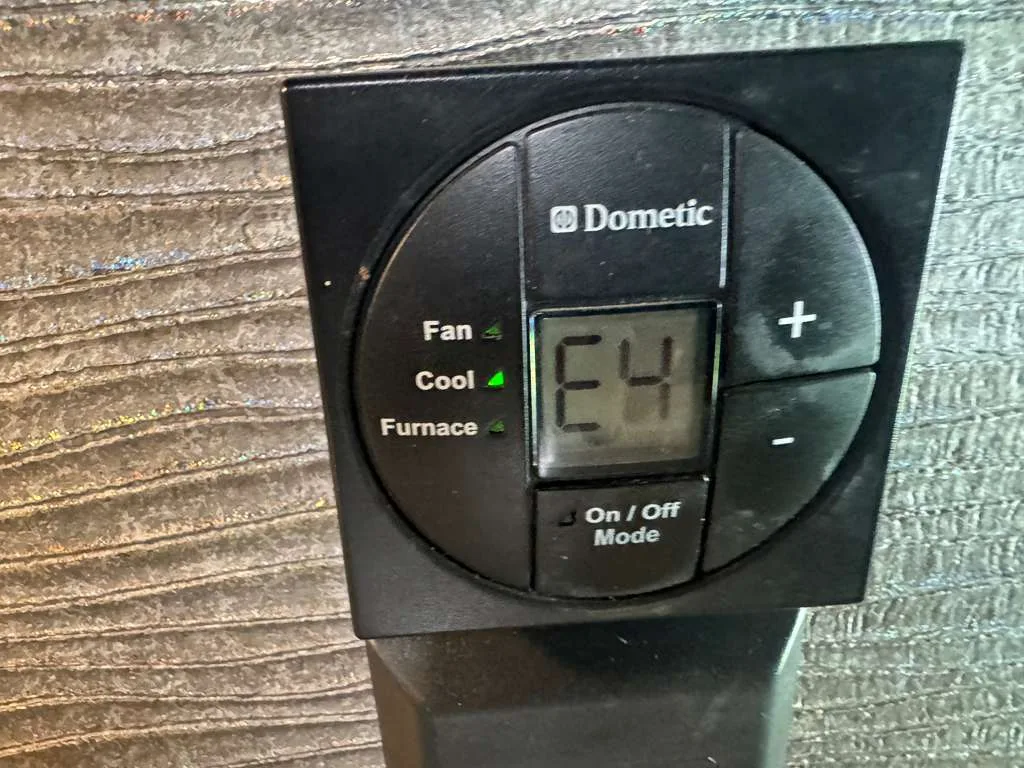
The distinction between a heat pump and a standard air conditioner is a single additional component - the reversing valve - along with a thermostat capable of sending the signal that activates it. Everything else: the compressor, the coils, the refrigerant, the fan motors, is shared hardware. That simplicity is also what makes targeted diagnosis practical at the coach without pulling the unit or returning it to a shop.
Why Your Heat Pump Blows Cool Air in Heat Mode
When a heat pump runs in heat mode but delivers cool or room-temperature air, there are two possible explanations: the reversing valve did not switch, or the thermostat never commanded it to. Both conditions feel identical from inside the coach - the fan runs, air moves, nothing warms. Before assuming the valve itself has failed mechanically, a technician will verify whether the thermostat is actually sending the O or B signal that energizes the reversing valve solenoid. A wiring fault, a failed thermostat output, or a simple misconfiguration of the heat pump wire terminal accounts for a meaningful share of heating calls.
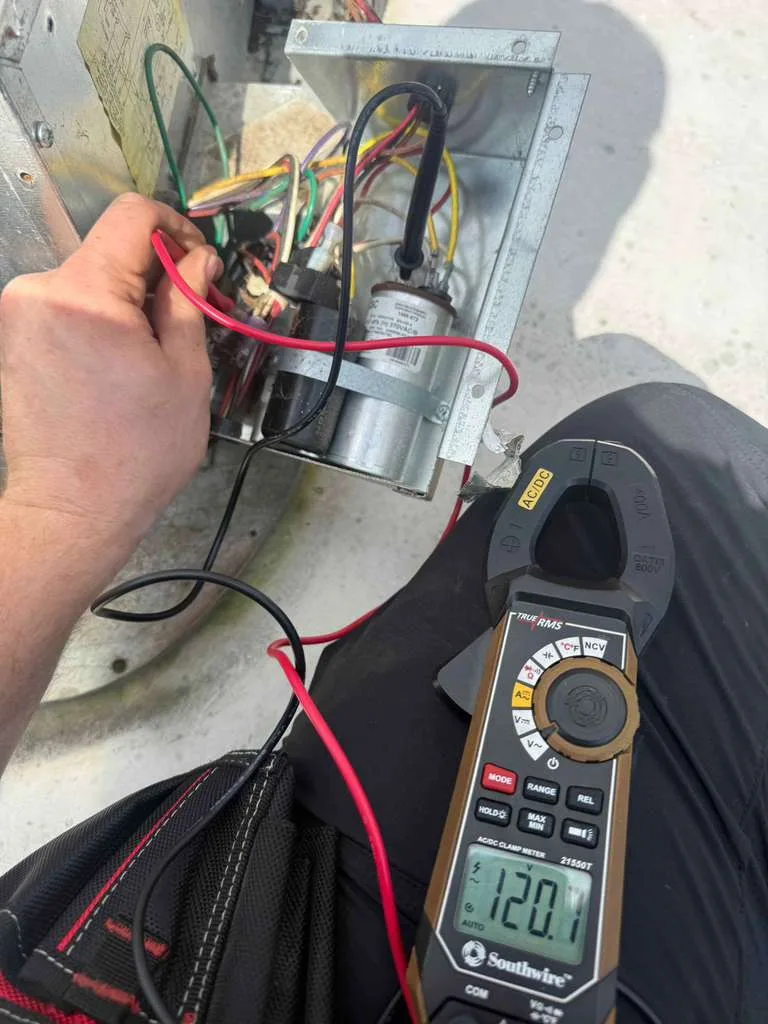
If the thermostat is sending the correct signal and the valve is still not switching, the solenoid coil is tested directly with a multimeter. A burned coil measures open circuit and will not energize regardless of the thermostat command. That is a part replacement - the coil itself in some cases, the complete valve assembly in others. The distinction between a stuck mechanical slide and a dead solenoid matters because one requires refrigerant recovery and the other does not.
The Temperature Range Where a Heat Pump Is Worth Relying On
RV-class heat pumps from Dometic, Coleman-Mach, and similar manufacturers are rated to provide meaningful heating capacity down to approximately 40 degrees Fahrenheit ambient. Below that threshold the coefficient of performance falls low enough that a propane furnace becomes the more efficient choice for the amount of heat it produces relative to the energy source consumed. In practice this matters mainly in the Florida Panhandle and the northern inland counties on the coldest January and February nights, where overnight lows occasionally dip into the mid-thirties.
Through central and southern Florida, including the Space Coast, the Gulf Coast, and the Keys, outdoor temperatures during winter rarely approach the heat pump's efficiency floor. Most coastal areas spend December through February with daytime highs in the sixties and seventies, keeping the heat pump comfortably within its efficient operating range for most or all of a typical day. Owners who winterize in these regions and rely entirely on the heat pump without propane backup are usually making a sound choice.
How a Heat Pump Differs From Running Your Propane Furnace
A propane furnace creates heat through combustion and vents the resulting byproducts outside the coach. It draws from the same LP tank that supplies your stovetop and water heater, and its operating cost is tied directly to the price of propane, which fluctuates seasonally. A heat pump, by contrast, does not create heat - it moves heat from the outdoor air into the coach using a refrigerant cycle. The electricity consumed runs the compressor and the fan motors; the heat itself is extracted from ambient air at no additional fuel cost.
The practical consequence in Florida is that a heat pump is almost always the lower-cost heating choice on a per-BTU basis when the outdoor temperature is above 45 degrees. It also produces no combustion byproducts inside the coach, which matters for air quality on extended stays in a closed-up RV during cooler weather. The furnace remains the appropriate backup when temperatures drop quickly overnight or when you are parked somewhere the heat pump would cycle too inefficiently to keep up with heat loss.
What Happens When the Heat Pump Runs but Produces Very Little Heat
A heat pump that runs continuously but produces only slightly warmer air than outside is usually operating near its outdoor temperature limit, has a partially restricted outdoor coil, or has a refrigerant charge below the manufacturer specification. All three conditions cause similar symptoms - the system is working, but it cannot extract enough heat from the ambient air to meaningfully warm the coach. Determining which factor is dominant requires pressure measurements at the service ports and a visual inspection of the outdoor coil.
Frost accumulation on the outdoor coil is a specific sub-case that catches owners off guard. When the outdoor coil drops below freezing during the extraction cycle, condensation freezes on the fins and progressively reduces heat transfer. Most heat pumps include a defrost cycle that periodically reverses into cooling mode briefly to melt the ice, but a refrigerant charge that is low on the high-pressure side can make frosting worse than it would otherwise be. A properly charged system in Florida's climate rarely builds significant frost outside of unusual cold snaps.
Understanding the Reversing Valve and Its Failure Modes
The reversing valve is the component that distinguishes a heat pump from a plain air conditioner. It is a four-port solenoid-actuated valve, positioned on the high-pressure refrigerant line, that redirects refrigerant flow so that the indoor coil becomes the condenser in heating mode rather than the evaporator. In cooling mode the valve is typically de-energized and held in position by refrigerant pressure; in heating mode the solenoid energizes and shifts a slide that changes the routing.
Failure modes fall into two categories. The solenoid coil can burn out, leaving the valve permanently in one position regardless of the thermostat command - diagnosable without opening the refrigerant circuit. The mechanical slide can stick, which may be solvable by tapping the valve body while the solenoid is energized, or may require replacement of the complete valve assembly with refrigerant recovery. Stick failures are more common in systems that have sat unused for extended periods, particularly in coastal environments where moisture and salt air can affect internal components.
Adding Heat Pump Capability to a Standard Rooftop Unit
A standard rooftop air conditioner - one that only cools - cannot be retrofitted with heat pump capability after the fact. The compressor, coils, and refrigerant circuit are specific to the mode of operation, and a heat pump unit contains different internal hardware in addition to the reversing valve. The practical path to adding heat pump function is replacing the unit with a heat pump model sized for the same roof opening, which are typically standardized at 14.5-inch or 15-inch widths depending on the manufacturer.
The thermostat must also be changed or re-wired when adding a heat pump. A standard cooling-only thermostat does not have the O or B terminal needed to command the reversing valve. Upgrading to a compatible digital thermostat at the same time as the unit replacement is the correct approach and avoids a return visit when the heat mode does not work because the control signal is missing. Jesse verifies thermostat compatibility and wiring before completing any rooftop unit replacement at the coach.
Why Refrigerant Charge Matters More on a Heat Pump Than a Cooling-Only Unit
A cooling-only RV air conditioner that is slightly undercharged will still cool, just less efficiently. A heat pump that is undercharged in the same proportion will show a much more pronounced loss in heating performance, because the heat extraction process in heating mode depends on maintaining a specific pressure differential across the reversing valve. Low refrigerant reduces that differential and pushes the system further toward the condensing coil's frost threshold at moderate outdoor temperatures.
Florida's heat pump owners sometimes notice heating performance degrading over several seasons without an obvious cause. Unlike an automobile air conditioner, an RV rooftop system is not serviced annually as a matter of routine. A refrigerant check every two to three seasons - or whenever heating performance seems weaker than the outdoor temperature would suggest - catches slow leaks before they cause secondary damage. A leak test accompanies every refrigerant recharge Triton performs so the underlying cause is addressed rather than just refilled.
Pricing for RV Heat Pump Service in Florida
All heat pump service begins with an on-site service call that covers the trip, the first hour of diagnostic labor, operating mode testing, refrigerant pressure measurement, and reversing valve verification. Additional parts and labor are priced separately based on what the diagnosis reveals.
| Service | Typical Range | Notes |
|---|---|---|
| Service call (trip + first hour) | $299 - $399 | Includes mode test, refrigerant pressure check, reversing valve verification |
| Thermostat / control replacement | $150 - $380 | Digital and analog; heat pump mode configuration included |
| Reversing valve replacement | $350 - $850 | Uncommon but specific to heat pumps; requires refrigerant recovery |
| Refrigerant recharge (R-410A) | $150 - $350 | If system is low; leak test first |
Pricing disclaimer: Ranges shown reflect typical Florida mobile service costs and are provided for general planning purposes. Final pricing is confirmed after on-site diagnosis. These are not guaranteed quotes and national averages may differ. Parts pricing varies by coach brand and component availability.
Frequently Asked Questions - RV Heat Pump Service
Why does my heat pump blow cool air even on heat mode?
At what outdoor temperature does a heat pump stop being useful?
How is a heat pump different from running the furnace?
Why does my heat pump run but produce very little heat on a cold Florida morning?
What is the reversing valve and how does it fail?
Sources
- Airxcel heat pump documentation - Coleman-Mach heat pump specs and reversing valve service procedures.
- AHRI heat pump performance ratings - COP ratings for RV-class heat pumps at Florida ambient temperatures.