RV Solar Installation in Florida: What Owners Actually Need to Know
Florida gives you more usable solar hours per year than almost anywhere in the country. What it does not give you is a system that runs itself - that depends entirely on how well the battery bank is sized relative to the loads you want to run. Sizing the panels first and buying the batteries to fit them is how systems end up undersized. Reverse the order and the math works.
What does a starter solar system realistically power?
On a 200-watt panel system with 100 amp-hours of AGM storage, expect to run lights, a phone charger, a fan, and a small 12-volt refrigerator through a typical Florida day and overnight without draining the bank below fifty percent.
What a starter system does not power is a rooftop air conditioner. That is the ceiling-level power draw that requires a different class of system - typically 400 to 800 watts of panels, 200 or more amp-hours of lithium storage, and an inverter that can handle the startup surge. The math on running AC from solar in Florida is achievable but it is not a starter system conversation.
The realistic approach is to list every device you want to run, find its watt-hour consumption per day from the label or manufacturer spec, add twenty percent for inefficiency and converter losses, and use that total as your daily demand. Build the battery bank first to cover two days of that demand, then size the panels to restore the bank within six to eight hours of good sun.
That sequence - demand, then storage, then generation - produces a system that works. Buying a panel kit first and figuring out storage later produces a system that constantly feels short.
Why does battery bank sizing matter more than panel count?
Because solar panels only generate during sunlight, but your loads run all day and night. The battery bank is the buffer that carries you through clouds, shade, mornings and nights. A large panel array on a small battery bank charges the bank quickly and then has nowhere to send the power, while an undersized bank runs out before the panels can restore it.
The practical rule for AGM batteries is to treat fifty percent depth of discharge as the usable capacity. A 100 amp-hour AGM bank gives you fifty usable amp-hours before you risk reducing its service life. A 100 amp-hour lithium battery gives you eighty to ninety usable amp-hours and tolerates the deeper cycling.
In Florida's summer heat, battery capacity drops measurably. A battery rated at 100 amp-hours at seventy-seven degrees delivers closer to eighty at a battery temperature of ninety-five degrees, which is what a sealed compartment reaches on a hot afternoon. Build that margin into your sizing rather than discovering it on the road.
The battery bank is also the more expensive component per kilowatt-hour, which is why owners often undersize it. The cost of a properly sized bank upfront is less than the cost of adding capacity later when the installation has to be partially reworked to fit it.
What is the difference between PWM and MPPT controllers in Florida heat?
An MPPT controller recovers ten to thirty percent more power from the panels than a PWM controller in real-world conditions, and that difference is largest exactly when Florida heat suppresses panel output.
A solar panel's voltage rises in cold weather and falls in heat. A PWM controller clips the voltage to match the battery, wasting the excess. An MPPT controller converts that excess voltage to current instead, recovering usable power from the panel at every temperature point. On a Florida July afternoon when the panels are running hot, the MPPT advantage is at its maximum.
PWM controllers are less expensive and entirely appropriate for small 12-volt systems where the panel voltage closely matches the battery bank voltage. The moment you add more than one or two panels in series, or move to a higher-voltage panel, the MPPT advantage makes up for the cost difference within one to two seasons.
For a Florida coach where the system will be used year-round and the summer sun is the most intense production period, MPPT is the practical choice for any system above 200 watts. Below that, PWM and MPPT are close enough that installation simplicity can be the deciding factor.
What does the charge controller display tell you day to day?
The two numbers worth checking daily are the battery state of charge and the current generation rate in amps. Together they tell you whether your system is keeping up with your loads and how the bank starts each day.
A bank that starts each morning at ninety percent or above and reaches a hundred before noon means the system is right-sized or oversized. A bank that starts each morning lower than the previous morning is in a deficit - loads are exceeding what the panels are restoring on a daily basis. That trend, if sustained, ends with a discharged bank.
The generation rate in amps at midday is your peak production reading. If it is significantly below what the panel specifications suggest, there is a loss somewhere in the system - a dirty panel, a shaded cell, a loose connector or a controller that needs reconfiguration. A new system that has never hit its rated output has a fault that should be found before it runs for a full season.
Most MPPT controllers log production history by day. Reviewing that history monthly tells you whether production has been declining gradually, which is usually panel soiling, or dropped sharply, which usually points at a specific component failure.
How do you read your system before adding more panels?
Check whether your existing charge controller has unused capacity before buying more panels. Most controllers are rated for a maximum panel input in watts, and adding panels beyond that rating gains nothing - the controller clips the excess.
The second check is battery acceptance. A bank that reaches full charge by noon every day cannot absorb more panels because it is already at capacity. Adding panels to a full bank does not extend your range - it just changes the time of day the bank reaches full charge. If you want more capacity, you need more battery, not more panels.
If the bank is consistently not reaching full charge by late afternoon, adding panels will help. If it is consistently reaching full charge and you want to run higher loads, adding batteries is the right move. These are different problems with different solutions and adding panels to solve a battery-deficit problem does not work.
Measure your actual daily consumption using the shunt or battery monitor that came with your system, or install one if you do not have one. Guessing your consumption is how systems end up sized incorrectly. Twenty-four hours of real data from your actual usage pattern is more useful than any general sizing formula.
Why does shading kill solar output faster than most people expect?
Because solar panels connected in series act as a chain - a shadow on one cell reduces the output of the entire string, not just the shaded portion. A shadow covering five percent of a panel can reduce the string output by fifty percent or more depending on how the bypass diodes are arranged.
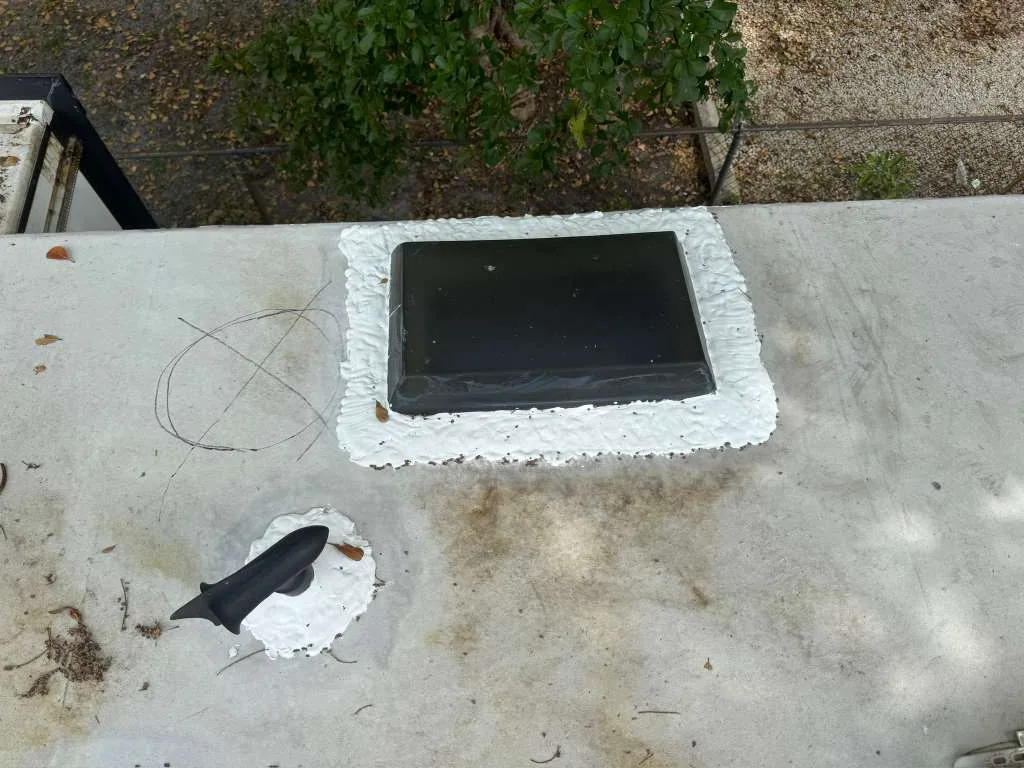
The AC unit shroud, roof vents, antennas and satellite dishes all create shadows that move across the panel area as the sun tracks through the sky. A panel sited to be shadow-free at nine in the morning may have a shadow across it from ten to two, which is peak generation time. Walk the roof before you buy panels and track the shadow path across the mounting area through mid-morning to mid-afternoon.
When shading cannot be avoided, wiring panels in parallel rather than series limits the shadow penalty to the shaded panel rather than the entire string. Parallel wiring produces lower voltage and requires a larger-gauge cable, but it is the correct configuration for any roof where full-sun conditions cannot be guaranteed throughout the day.
Bypass diodes in higher-quality panels partially mitigate the shading penalty. A panel with cell-level bypass diodes loses only the output of the shaded cells rather than the shaded string, which matters a great deal on a shaded roof.
What should a proper installation include?
Fused wiring from the panels to the controller, fused wiring from the controller to the battery bank, and a properly sized cable gauge for the total current in each run. Undersized wiring causes voltage drop that reduces system performance and creates a fire risk at sustained loads.
A battery monitor or shunt that shows real-time state of charge, not just voltage. Voltage is a poor proxy for state of charge, especially in a battery bank that has just been charging or discharging. A shunt-based monitor measures actual current in and out and gives you an accurate amp-hour count.
Mounting hardware that is sealed at the roof penetration. Every wire that goes through the roof membrane is a potential water entry point. Self-sealing entry grommets or a properly applied marine sealant at the penetration site matters as much as the electrical work. Our electrical service and our roof repair service both apply here.
A label or diagram inside the power center or battery compartment showing what was installed, the controller settings, and the panel wiring configuration. This seems like a small thing until the system needs service two years later and nobody can remember what settings the controller was programmed to.
What should an installer tell you before you sign anything?
They should tell you the expected daily output in amp-hours at your typical location and time of year, based on the panel wattage, the charge controller efficiency, and the hours of usable sun at your latitude. Not a range. A specific number based on your specific system.
They should tell you what loads the system will and will not support. If you want to run the AC, they should tell you whether your system as specified can do it and for how long, or tell you clearly that it cannot. A system specification that leaves that question open is not a complete specification.
They should give you the controller settings and the warranty information for each component separately. The panel warranty, the controller warranty and the battery warranty are different documents from different manufacturers and they have different claim processes.
If they cannot answer the daily output question with a specific number, or cannot tell you what loads the system supports, those are things to resolve before the installation begins. The answers depend on measurements and calculations, not guesses, and any installer doing the work correctly already has those numbers before the first panel goes on the roof.
Questions owners ask before adding solar to their RV
How many panels do I need to run the AC?
Typically 400 to 800 watts of panels and 200 or more amp-hours of lithium storage, depending on your AC unit's consumption and how long you want to run it. A 15,000 BTU rooftop unit draws 1,300 to 1,500 watts when running and has a startup surge significantly higher than that. Running it continuously from solar requires a large system and is not a beginner install.
Are AGM or lithium batteries better for a Florida RV?
Lithium handles Florida's heat better than AGM at deep discharge levels, tolerates higher charge rates, and provides more usable capacity per pound. The initial cost is higher but the cycle life at Florida temperatures is substantially better. For a coach used year-round in a hot climate, lithium is usually the more cost-effective choice over a five-year period.
Can I install solar panels myself?
The panel mounting and basic wiring is within reach of owners comfortable with rooftop work and basic electrical skills. The parts that benefit from professional involvement are the roof penetration sealing, the battery bank connection and the charge controller programming. A self-installed system that is not correctly protected with fuses or that has an improperly sealed roof penetration creates ongoing risk.
How long does a solar installation take?
A single-panel, simple system with one battery can be done in a day. A multi-panel system with a battery upgrade and a new inverter is typically a two-day installation. The time varies more with the routing of the wiring inside the coach than with the panel mounting itself - getting wiring from the roof to the power center through interior walls is the slow part.
Do I need a permit to add solar to my RV?
Generally no, because an RV is a vehicle rather than a structure, and vehicle modifications are not typically subject to building permits. If you are installing solar on an RV that you have titled as a permanent residence, some jurisdictions treat it differently. Check with your county if you are in a permanent or semi-permanent site.
What is the lifespan of solar panels on an RV roof in Florida?
Quality monocrystalline panels degrade at about half a percent per year and carry twenty-five year production warranties. The mechanical issue in Florida is the sealant around the mounting hardware, which degrades faster than the panels themselves. Inspect the sealant annually and reseal when you see cracking or separation. The panels themselves will outlast most coaches.
Sources
- US Department of Energy - Energy Saver - Federal guidance on home and vehicle energy use including solar power system sizing, battery storage, and Florida-specific solar resources.
- US EPA - Green Power Markets - EPA data on solar energy generation by region, useful for evaluating Florida solar potential relative to other states for RV system sizing.
- Dometic - product support - Compatibility and installation documentation for Dometic power management systems and battery components commonly paired with solar installs.
- US Fire Administration - fire prevention - Electrical fire risk from undersized wiring and improperly protected circuits, which applies directly to DIY solar wiring in RV battery compartments.