Slide-Out Stuck? What to Do in the Next Ten Minutes
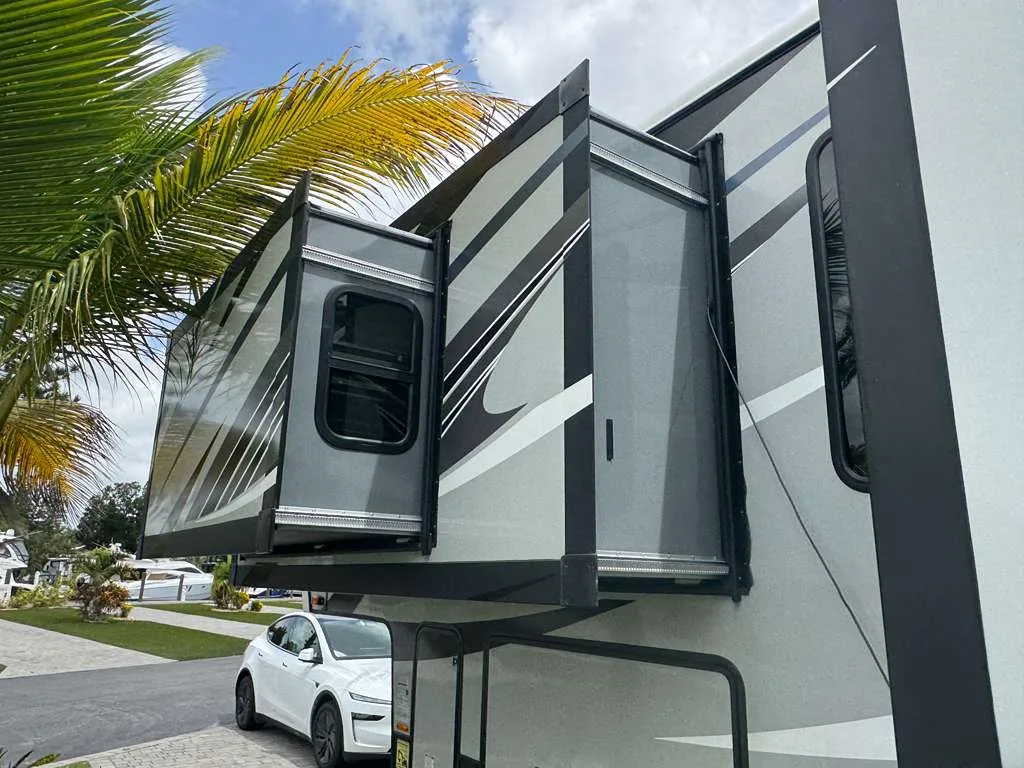
Stop pressing the switch. A slide that has stalled is already loaded against something, and holding the button adds torque to a mechanism that cannot move, which is what turns a cheap repair into a bent rail. Check battery voltage while the switch is held, look for anything obstructing the room, and listen to what it is doing before trying again.
Stop. What is the first thing not to do?
Do not keep holding the switch, and do not try it repeatedly hoping it frees itself.
A room that has stopped is stopped for a reason, and that reason is either no power or something binding. If it is binding, every further attempt puts full motor torque into a mechanism that is already loaded, and the weakest part gives first.
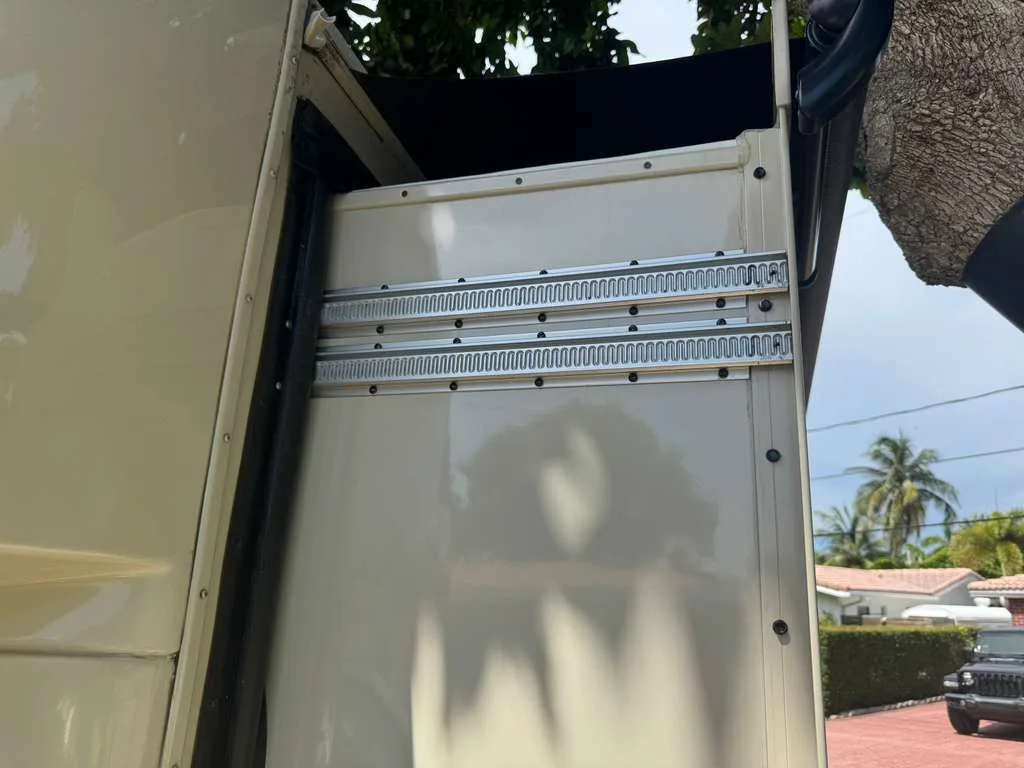
On a rack system that is normally the toothed rack or the gear pack. On a cable system it is the cable or a pulley. Both are parts, both are replaceable, and both are far cheaper than the outcome of continuing.
The expensive outcome is a bent rail, because that is no longer a parts swap. A room that runs on a distorted rail never seats squarely again, which brings a permanent leak with it.
Is the room stuck going out, or coming in?
It matters more than it sounds, because only one of those two stops you traveling.
A room stuck partly out is the urgent version. The coach cannot legally or safely move, the seal is not compressed so weather gets in, and the room is not restrained for the road.
A room stuck partly in is inconvenient rather than urgent. You lose the space, and you can usually still travel once it is confirmed fully retracted and latched, which is the thing to verify rather than assume.
Say which one it is when you call. It changes how quickly somebody needs to be there, and it changes what they bring. It also changes what you should do in the meantime: a room stuck out needs protecting from weather, a room stuck in mostly needs leaving alone until somebody looks at it. Neither is improved by pressing the switch again.
What does the sound tell you?
Nearly everything, and it is the one diagnostic available to you standing there with nothing but your ears.
Complete silence means no power is reaching the motor. That is a battery, a fuse, a switch or a controller, and it is the most common cause by a wide margin.
A hum or a buzz with no movement means power is arriving and something mechanical is stopping it. That clears the whole electrical side in one observation and points at the mechanism.
Grinding is the one to act on immediately. It means teeth that should be meshing are skipping past each other, and every additional second removes material that cannot be replaced. Let go of the switch. Stand outside by the room rather than inside when you listen. Through a wall the three sound far more alike than they actually are, and getting this one wrong sends the diagnosis in the wrong direction entirely.
How do you check the battery properly in this moment?
While the switch is held, not at rest, because those two readings are completely different on a slide circuit.
Slide motors draw an enormous current for their size. A battery bank that runs the lights, the pump and a fan without complaint can collapse under that load, and everything else in the coach carries on working normally, which is exactly what makes it confusing.
So put a meter on the bank, have somebody hold the switch, and watch what the voltage does. A pack that reads acceptably at rest and drops away sharply under load has answered the question.
A corroded ground or a loose battery terminal produces the identical symptom, because the voltage is lost in the connection rather than in the battery. Both are worth cleaning before anything is condemned. This is the single most useful measurement on the page and it takes under a minute.
Is anything physically in the way?
Look before you assume a fault, because this is the cheapest possible answer and it happens constantly.
Outside: a tree, a post, a chair, an awning arm, a neighboring coach, or ground that has given way under a jack and changed the coach's attitude.
On top: a slide topper that has torn and jammed its roller, or debris and standing water sitting on the roof of the room. A topper wrapped around itself will stop a room dead.
Inside: something that has shifted into the path of the room, which is the one people find last and feel worst about. A recliner, a bin or a box in the wrong place is enough. Walk the whole length of the room outside and in before concluding anything is broken. It costs two minutes and it is free to fix.
Can you travel with it partly out?
No, and this is not a judgement call - it is the one hard rule on this page.
A room that is not fully in and latched is not restrained for the road. It is also sitting on its rails with its seal uncompressed, so it takes weather at highway speed and the mechanism takes every bump.
The wider point is clearance. A partly extended room changes the width of the coach and puts an unsupported mass out to one side, which affects how it handles and what it will hit.
If it will not come in electrically, bring it in on the manual override and travel with it secured. That is exactly what the override exists for. A room caught on a driveway lip or a fuel station kerb turns a slide repair into a body repair, and that is the outcome this rule exists to prevent.
Where is the manual override on your coach?
It depends on the system, and the time to find out is now rather than while standing in the rain.
On a hydraulic system there is a release valve at the pump that lets fluid return so the room can be pushed in by hand. On a rack or cable system there is a motor disengagement and a hex or socket you turn with a drill or a hand crank, usually reached from outside or from a bay.
The procedure differs by manufacturer and it is documented. Finding yours once, in daylight, with nothing wrong, is genuinely ten minutes well spent.
What it is not is a repair. The fault is still there, the room should not be operated again until it is found, and forcing a jammed mechanism with a drill does exactly the damage the first section warns about.
What do you tell the technician when you call?
Five things, and they shorten the visit considerably because they narrow the fault before anyone arrives.
Whether it is stuck out or in. What it sounds like - silence, hum or grind. What the battery does under load. Whether one side moved and the other did not, which points at the drive between them. And whether anything was obstructing it.
That last one about one side moving is worth watching for specifically. A room that goes in at an angle is a synchronization problem, and on a Schwintek system it is corrected by retiming rather than by replacing anything.
Our slide-out service page covers what each of those turns into, and our electrical service covers the supply side that stalls most of them. Writing those five down while you wait is genuinely the most useful thing you can do with the time.
Questions owners ask when a slide will not move
My slide goes out fine but comes in crooked. Is that urgent?
It is worth dealing with promptly rather than treating as a quirk. A room arriving at an angle does not seat squarely, so the seal cannot close and the leak follows. On a rack system it is usually a synchronization problem corrected by retiming; on others it means one side is meeting more resistance than the other.
Can I push the room in by hand?
On a hydraulic system, once the release valve is opened, that is exactly the procedure. On an electric system the motor has to be disengaged first or you are fighting the gearbox. Never push against a mechanism that is still driven and never against one that is jammed.
Why did it work yesterday and not today?
Most often the battery, because it degrades gradually and the slide is the biggest load on the coach - so the slide is the first thing to stop working. Ground temperature and a jack that has sunk overnight are the other two, both of which change the geometry the room runs in.
Is a slide topper worth having?
Yes on most coaches, because it keeps water, leaves and grit off the roof of the room, and that debris is what jams mechanisms and destroys seals. It is a consumable itself in this climate and a torn one causes the problem it was fitted to prevent.
The motor hums but nothing moves. Is the motor dead?
Usually not - a hum means the motor has power and is trying. That points downstream at the gearbox, a sheared pin, a seized screw or something binding the room. It is a better position to be in than silence, because it has already cleared the whole electrical side.
Can you repair a slide at a campground?
Most of it, yes, and that is where most of this work happens. What we need is room to extend the slide fully and access underneath. A jammed room in a tight storage bay sometimes has to be moved first, and we will say so rather than working in a space that risks damaging it.
Sources
- Lippert Components - slide-out owners manual - Manufacturer documentation for the rack, cable and hydraulic systems fitted to most coaches.
- Lippert - manual override and motor disengagement - How a stuck in-wall room is brought in by hand without damaging the drive.
- Lippert - in-wall slide-out retiming - The defined procedure for a room that goes in at an angle.
- Lippert Power Gear - hydraulic systems - Hydraulic release procedure for coaches where the slide shares the leveling pump.