RV Fridge Not Cooling? Work Through It in This Order
Before anything is opened, check three things: whether the coach is roughly level, whether the roof vent and flue behind the fridge are clear, and whether it fails on both power sources or only one. Those three answer a large share of no-cooling calls, they take about five minutes, and each one narrows the problem to a different part of the appliance.
What do you check in the first five minutes?
Level, vents and power source, in that order, because each rules out a different part of the fridge.
Level matters because an absorption fridge circulates its solution by gravity rather than with a pump. Parked on a slope for hours, the solution pools instead of flowing, and cooling falls away with nothing broken. Roughly level is enough - it does not need to be perfect.
The vents matter because the whole system works by rejecting heat out through the sidewall vent and roof cap. A wasp nest in the flue or a blocked upper vent stops a perfectly healthy fridge, and both are common on a coach that stood through a Florida summer.
Power source matters because it tells you which half of the appliance to look at. All three checks are free and none of them requires a tool.
Is the fridge actually running at all?
That sounds obvious and it is worth confirming, because a fridge that is not running and a fridge that is running badly are different problems.
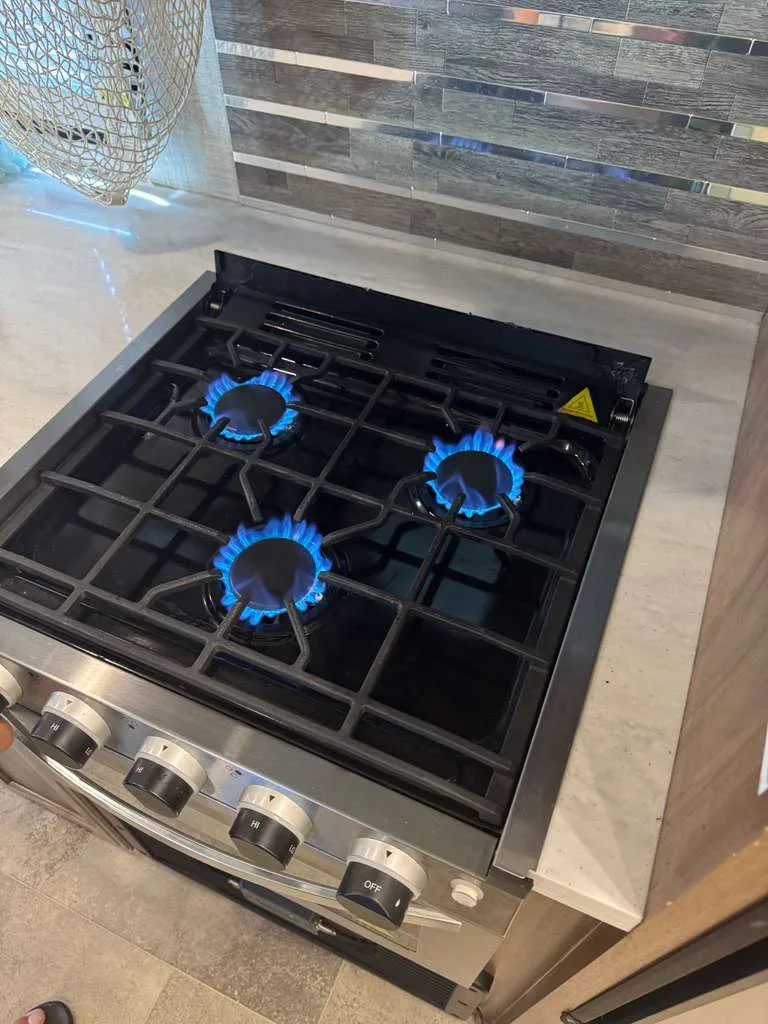
On gas you should hear a soft roar from the burner behind the lower vent within a minute or two of switching over, and see a blue flame through the inspection slot if the cover comes off. On electric there is no sound at all, which is exactly why owners assume it has failed.
The control panel is the other tell. A unit sitting on a fault code, or one that has locked out after failing to light three times, is reporting a problem rather than trying and failing quietly.
If nothing happens on either source, the fridge is not being told to run, and that is a supply or control question rather than a cooling one.
Does it cool on one power source but not the other?
Then you have already found which half is at fault, and it is the single most useful thing you can report to us.
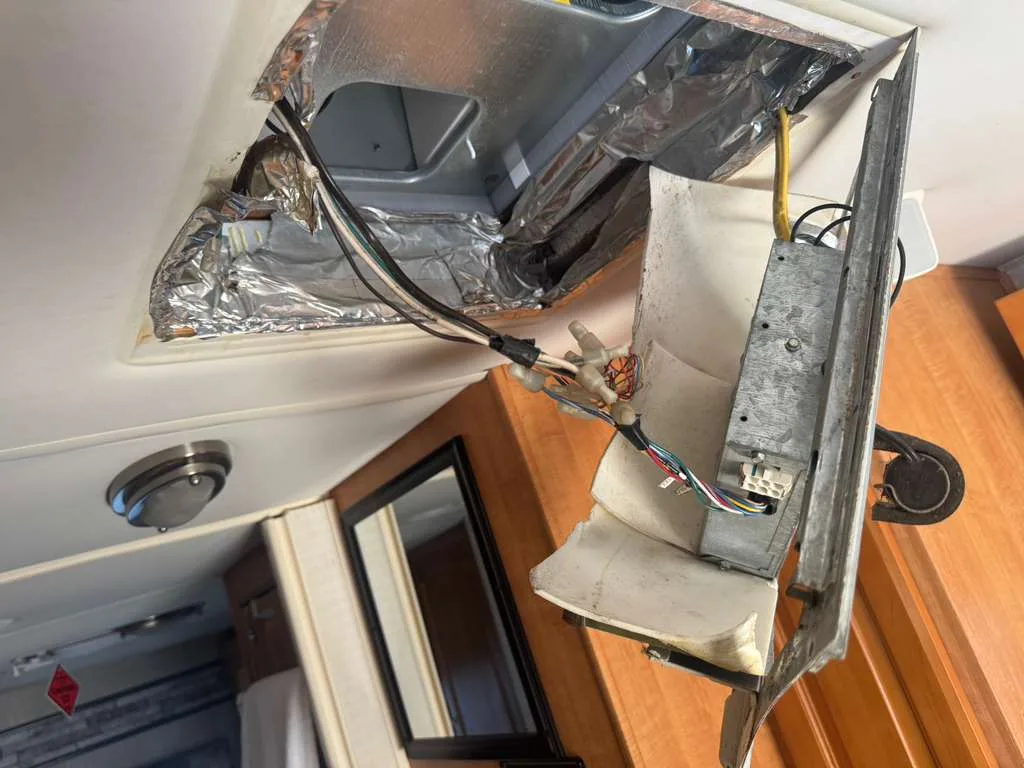
Everything except the heat source is shared between gas and electric. The cooling unit, the controls and the thermistor all work the same way whichever is running. So a fridge that cools on one and not the other has a fault on that source's side and nowhere else.
Failing on electric only points at the heating element or its thermal cutout. Failing on gas only points at the burner, its orifice, the flue or the supply, and a blocked burner tube is the most common of those in this state.
Failing on both is the more serious version, because it means the problem is in the part they share. That is the part where a technician is genuinely needed, and knowing it in advance shortens the visit.
How level does the coach actually need to be?
Close enough that a person standing inside would not notice a slope, which is a lower bar than most owners assume.
The old advice about needing to be level to within a degree came from much older units. Modern absorption fridges tolerate normal parking, and a site that feels flat underfoot is generally fine.
What they do not tolerate is being left on a noticeable slope for hours while running. That is when the solution pools, and repeated episodes of it can damage the cooling unit permanently rather than just stopping it temporarily.
Traveling is not the problem - movement keeps everything circulating. It is standing still, at an angle, with the fridge on, that does the harm. So the practical rule is simple: if the site looks flat, it is flat enough. If the coach is visibly leaning, level it before blaming the fridge, and give it a few hours to recover.
What does the roof vent have to do with it?
Everything, because an absorption fridge cools by moving heat out through that path and nowhere else.
Air enters at the lower sidewall vent, rises past the coils and the flue, and leaves through the roof cap. That convection is the whole cooling mechanism, and it only works if the path is open from bottom to top.
Mud daubers build in the flue in a single season here. Leaves and debris collect under the roof cap. Both restrict the airflow the fridge depends on, and neither produces any symptom except a fridge that will not get cold.
It is worth looking with a torch rather than assuming. It is also the cheapest thing on this whole list to put right, and fitting an insect screen stops it happening again. A screen costs a few dollars and it removes one of the two most common causes on this page.
How long should an RV fridge take to get cold?
Far longer than a household fridge, and judging it too early is one of the most common false alarms we see.
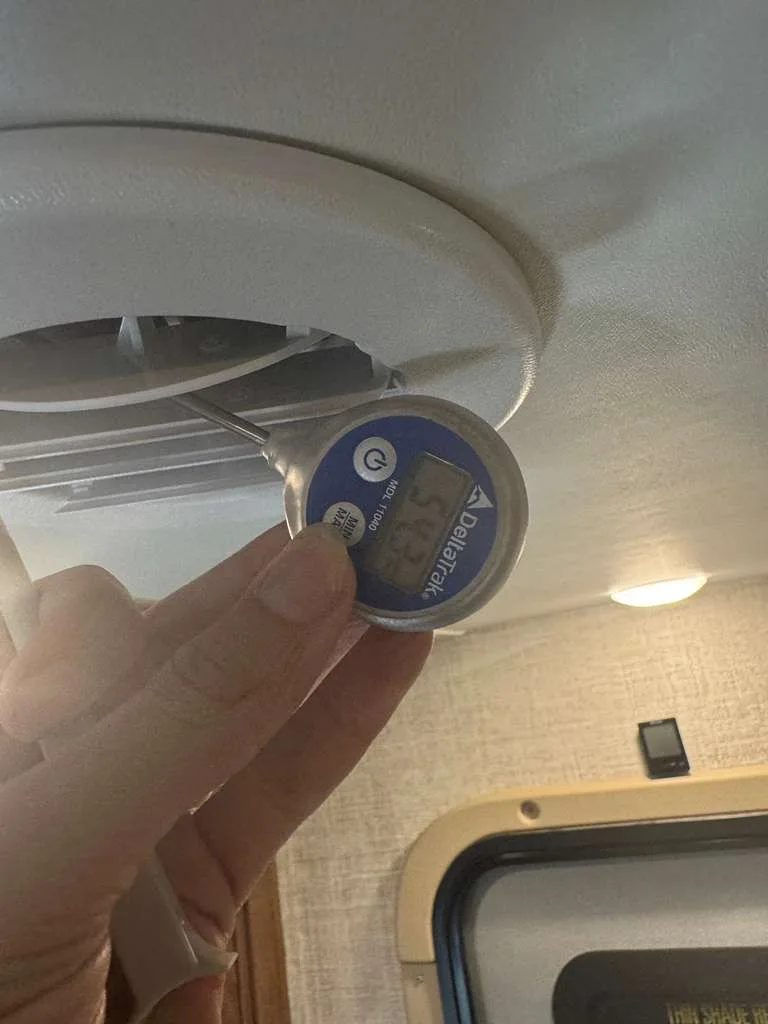
An absorption unit starting from ambient in a Florida summer needs the best part of a day to pull the box down properly. Loading it with warm food and drinks at the same time extends that further, because everything inside has to be cooled as well as the air.
The practical approach is to start it the night before a trip, empty, and let it get cold before anything goes in. A fridge that has had twelve hours and is still warm has a genuine problem; one that has had two does not necessarily.
The icemaker is the exception and the early warning. It needs a lower temperature than the food compartment, so it stops before anything else looks wrong.
What does an ammonia smell mean?
That the sealed cooling unit has leaked, and unlike everything above it, that one cannot be repaired.
The cooling unit is welded steel tubing charged with ammonia, water and hydrogen. There is nothing inside it to adjust or top up. Once the charge has escaped the unit is finished, and the fridge either gets a replacement cooling unit or a replacement fridge.
The evidence is usually obvious once you know to look. A sharp ammonia smell at the roof vent or behind the fridge, and often a yellow-green residue where the solution has dried on the tubing.
Switch it off if you find that. It is not a fire risk in the way a gas leak is, but it is not something to keep running, and continuing to heat a dry system achieves nothing.
What can you do while you wait for a technician?
Protect the food, gather the evidence, and stop making the diagnosis harder.
Move what matters into a cooler rather than opening the fridge repeatedly to check it. Every opening dumps the cold air it has managed to make, and on a unit that is already struggling that is the difference between slow and hopeless.
Write down what you have already established: does it fail on gas, on electric, or both; how long it has had; whether the vents were clear; whether there was any smell. Those four answers shorten a visit considerably.
And leave it switched off if there was any ammonia smell. Our appliance service page covers what the repair involves once the diagnosis is made. None of that fixes anything, and all of it makes the fix faster once somebody is there. It also occasionally saves the call entirely.
Questions owners ask about a fridge that will not cool
Can I run the fridge on gas while driving?
It is legal in most situations and it is a personal risk decision rather than a technical one. The specific place to have it off is a fuel stop, and many operators require it. A coach with an inverter and enough battery can run the fridge on electric instead and avoid the question.
Why is the freezer cold but the fridge is not?
That usually points at airflow inside the box rather than at the cooling unit. The fridge compartment is cooled by air moving down from the freezer, so a blocked vent inside, an overloaded shelf, or a failed circulation fan produces exactly that split.
Does burping the fridge actually work?
Sometimes, on a unit whose solution has crystallized after being left on a slope. Turning it off and inverting it lets the solution redistribute. It is a genuine last resort with a real success rate and it is not a repair - a fridge that needs it twice needs a technician instead.
Should I fit a fan behind the fridge?
In this climate it is one of the better value additions. A small fan behind the coils improves the convection the whole system depends on, and it makes the most difference exactly when you need it - a hot afternoon with the coach sitting still.
Is a residential fridge a better answer in Florida?
It holds a lower and steadier temperature and is far less bothered by heat, which is a real advantage here. What it needs in return is an inverter and a battery bank that can carry it overnight, so it turns a fridge decision into an electrical one.
How do I know if it is the thermistor?
A thermistor that has drifted usually produces a fridge that runs constantly and never reaches temperature, or one that freezes everything solid. It is an inexpensive part in an accessible place, which is why it is worth testing before anything more serious is assumed.
Sources
- Dometic - product support - Manufacturer service documentation for absorption refrigerators, venting and fault codes.
- Dometic - documents database - Manuals covering leveling tolerance, cooling times and airflow requirements.
- US Fire Administration - fire prevention - Why a blocked flue on a gas appliance is a safety matter rather than only a performance one.
- Airxcel - RV appliance brands - Documentation for the vents, fans and appliance components in the airflow path.